Is Spain Good for Indians? Honest Experience on Safety, Jobs & Cost (2026)
Is Spain good for Indians? After living in Madrid for several years, our honest answer is – yes, Spain is genuinely good for Indians, and in many ways it surprised us far beyond what we expected.
Quick Answer: Why Spain Works for Indians
- Safety: Spain ranks in the top 30 of the Global Peace Index – safer than most countries Indians typically consider migrating to
- Cost: Significantly cheaper than Germany, UK, or Netherlands – your money goes further here
- Healthcare: Free public healthcare for all residents – world-class quality that honestly puts many Indian private hospitals to shame
- Quality of life: Work-life balance, festivals, warm people, and weather that is far more forgiving than northern Europe
That said, Spain is not perfect for everyone. There are real challenges – the language barrier is serious, salaries are lower than Germany or UK, and the bureaucracy can test your patience. We will cover all of it honestly.

When we were back in India planning our move to Europe, Spain was not even on our list initially. We had heard about the tomato festival, bullfighting, and beautiful beaches, but we did not know if it was the right place for Indians like us to build a life. After living in Madrid for several years now, we can tell you – Spain surprised us in ways we never expected, both good and challenging.
We did everything ourselves – no agents, no consultants, just our own research and determination. But we know many Indian friends here who came through agencies and faced problems we will talk about in this article. So this is our honest take on whether Spain is actually good for Indians in 2026, based on real experience.
What is Spain Really Like for Indians Living There?
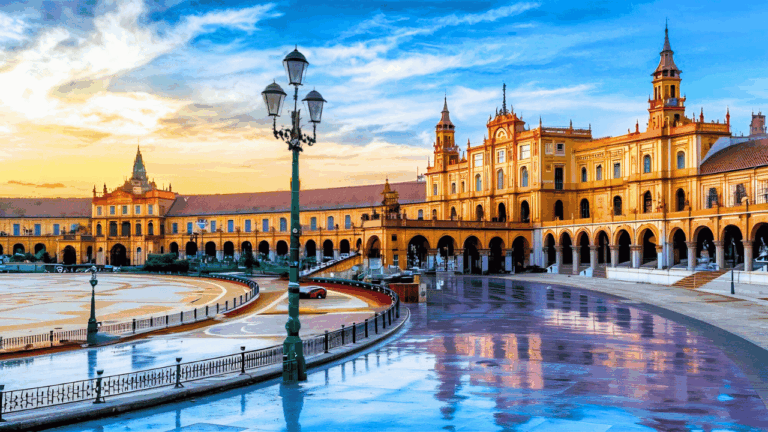
Spain, or España as locals call it, is located in southwestern Europe. It is a large country with rich history, art, culture, and architecture that will leave you speechless. We are based in Madrid, the capital city, and honestly the architecture here is something you cannot compare with anything.
The official language is Spanish, though some autonomous communities also speak Catalan, Galician, and Basque. The currency is Euro. One thing nobody tells you but we figured out ourselves – Spain has every type of landscape you can imagine. Snow-capped mountains, deserts, Mediterranean beaches, green valleys – all in one country. This is why Spain attracts millions of tourists every year, making it one of the top tourist destinations globally.
Spain’s economy is supported mainly by tourism, construction, and renewable energy sectors. According to recent data, Spain is the 15th largest economy in the world and 4th in the European Union. For Indians comparing it with our homeland, Spain’s GDP per capita is approximately 30,000 USD (around 25 lakh rupees), significantly higher than India’s.
📌 Official Resource: Learn about Spain’s autonomous communities and regional languages from the official government portal. This helps understand the cultural diversity before you move. Visit Official Website
▶️ Watch Full Video :
Spain vs Other European Countries: Which Is Better for Indians?
This is probably the most common question we get from friends back in India who are weighing their options. Germany? UK? Netherlands? Or Spain? There is no single right answer – it really depends on what you are looking for. But here is an honest comparison based on what we know and what friends who moved to those countries have told us.
| Factor | Spain | Germany | UK | Netherlands |
|---|---|---|---|---|
| Visa difficulty (for Indians) | Medium | Medium-High | High (post-Brexit) | High |
| Language requirement | Spanish essential | German essential | English fine | Dutch helpful, English OK |
| Job opportunities (IT/Tech) | Good in Madrid/Barcelona | Excellent | Excellent | Very Good |
| Average IT salary (entry) | €25,000–€35,000 | €40,000–€55,000 | £30,000–£45,000 | €38,000–€52,000 |
| Cost of living vs salary | Moderate – good balance | High | Very High | High |
| 1BHK rent (city centre) | €950–€1,500 | €1,200–€2,000 | £1,500–£2,500 | €1,400–€2,200 |
| Weather | Excellent – warm and sunny | Cold, grey winters | Cold, rainy | Cold, rainy |
| Indian community size | 50,000+ | 180,000+ | 1.8 million+ | 25,000+ |
| Work-life balance | Excellent | Good | Poor to Average | Good |
| Public healthcare quality | World top 10 | Excellent | Good (NHS) | Very Good |
| English spoken widely? | No – Spanish dominant | No – German dominant | Yes | Yes |
The way we see it – if you are an IT professional chasing the highest salary, Germany or the UK makes more financial sense on paper. But if you are thinking about quality of life, weather, affordability relative to what you earn, and just genuinely enjoying the country you live in – Spain is hard to beat.
Spain is especially well-suited for:
- Remote workers and digital nomads who have location flexibility
- Families who want safety, good schools, and outdoor lifestyle
- Indian professionals who are willing to learn Spanish and integrate deeply
- People who want warm weather year-round without the harsh northern European winters
- Students who want affordable tuition combined with a high quality of life
Spain may not be the right fit for:
- IT professionals who need maximum salary and do not care about lifestyle
- People who are not willing to learn Spanish at all
- Those looking for a large, established Indian community on the scale of the UK
There are approximately 50,000+ Indians currently living in Spain according to available community data, and the Indian community here has a genuinely good reputation — considered hardworking and peaceful by Spanish society. It is a smaller community than the UK, which means you will integrate more into Spanish life, which we personally see as a positive thing.
How is the Weather in Spain Compared to India?
Coming from India, the weather was one of our biggest concerns. Spain has four distinct seasons – summer, spring, autumn, and winter. Compared to other European countries, Spain’s winter is not extremely harsh. But compared to India, yes, it gets quite cold.
In Madrid, winter temperatures can drop to minus degrees, especially in January and February. We arrived in Spain in August, during early autumn, and the maple trees were turning red and yellow – a sight we had never seen in India. In winter, these trees lose all their leaves and stay bare until spring arrives.
Spring in Spain, from mid-March to mid-June, is absolutely beautiful. Everything blooms – from ground plants to tall trees. The cherry blossoms you might have heard about in Japan? Spain has similar varieties, and they are stunning. If you move to southern Spain cities like Seville or Malaga, winter temperatures are much milder – around 10 to 20 degrees Celsius, which is quite comfortable.
The temperature variation across Spain is significant. A place just one hour from Madrid can have completely different weather. This diversity means you can choose where to live based on your climate preference.
▶️ Watch Full Video :
Is Spain Safe for Indians?
This was one of our biggest worries before moving – would we face racism? Would people accept us? Honestly, we have been pleasantly surprised. But let us not just go by our personal experience – the data backs this up too.
Spain consistently ranks among the top 30 countries in the Global Peace Index, which measures safety and peacefulness across 163 nations. In 2024 alone, over 2,26,000 Indian tourists visited Spain according to Turespaña data, and there are no major incidents reported targeting Indians as a community. That is a significant number, and it tells you something real about how safe the country is for people coming from India.
Spanish people are welcoming, helpful, and treat everyone equally regardless of where you are from. When we first arrived and did not know the language, we were a bit nervous. But the kindness of people here made everything easier. If you are struggling with something in public, people will come forward to help you in whatever way they can. Even in government offices and police stations, officials handle everyone’s problems with genuine sincerity.
We have experienced no racism in our years here. Spanish people welcome everyone and treat everyone as equals. Now, you may have seen news about anti-tourism protests in Barcelona and Mallorca — those did happen, and they are real. But it is important to understand what those protests are actually about. Local residents are frustrated with mass tourism driving up rents and crowding their neighbourhoods. It is not directed at Indians or any particular nationality. It is aimed at the tourism industry as a whole. As someone living and working here, we have never once felt unwanted or targeted.
Spain’s crime index on Numbeo 2026 sits around 32 out of 100, which is considered low. For context, India scores around 44 on the same index. Spain is genuinely one of the safer countries you can choose to migrate to.
Common safety issues to be aware of:
- Pickpocketing in tourist-heavy areas – Sol and Gran Via in Madrid, and especially Barcelona’s La Rambla
- Tourist scams in city centres – be alert in very crowded spots
- Certain neighbourhoods to avoid at night – Vallecas in Madrid, Raval in Barcelona
These are the kinds of precautions you would take in any major city. Overall, for Indian families, students, and single professionals – Spain is a safe and welcoming place to build a life.
Can Indians Survive in Spain Without Knowing Spanish Language?
Let us be very clear about this – Spanish is the primary language in Spain. Very, very few people speak English here, especially outside major tourist areas. If you are coming to Spain for work or study, knowing Spanish is absolutely essential. We cannot stress this enough.
We struggled initially because our Spanish was basic. Simple tasks like going to the doctor, dealing with paperwork, or even shopping became challenging. People who came through agencies were told “English is enough” – that is completely false and those people faced serious difficulties.
However, if you are just visiting Spain as a tourist, language is not a major problem. Tourist areas have English speakers, and you can manage with basic phrases and translation apps. But for living and working here? Learn Spanish before you come, or be prepared to learn it very quickly after arrival.
Our honest advice would be – start learning Spanish at least 6 months before your move. It will make your life infinitely easier and help you integrate into Spanish society much faster.
▶️ Watch Full Video :
Is Spain Safe for Indian Students and Families?
Safety is crucial for peace of mind, especially for families and students. Spain is relatively safe compared to many countries. There are multiple layers of police – Guardia Civil (Civil Police), Policia Nacional (National Police), and in Basque and Catalonia regions, they have their own police forces as well.
Police patrol day and night throughout the country, especially in tourist spots. Even at night, Spain is fairly safe. Women and children can travel safely at night in most areas – something we really appreciate coming from India where night safety can be a concern in many cities.
What Are the Common Safety Issues in Spain?
Like every country, Spain has some issues. The main problems are pickpocketing, tourist scams, and petty theft. These occur mostly in tourist-heavy areas. In Madrid, places like Sol and Gran Via require extra caution. Barcelona is notorious for pickpockets. Always keep an eye on your belongings in these areas.
There are also certain neighborhoods you should avoid. In Madrid, areas like Vallecas have higher crime rates. In Barcelona, the Raval neighborhood, and similar areas exist in Seville. Our Spanish friends advised us to avoid these places, especially at night. People who came without doing proper research sometimes ended up living in these areas and faced problems.
Despite these issues, Spain’s overall crime rate is much lower than many other countries. According to Numbeo’s 2026 crime index, Spain scores around 32 out of 100, which is considered low. For comparison, India scores around 44. Spain is genuinely a safe country if you take basic precautions.
📌 Official Resource: Check real-time safety statistics and reports for Spanish cities on the official Ministry of Interior website. Very helpful for deciding where to live. Visit Official Website
Is Spain More Expensive Than India? Cost of Living in Spain 2026
Is Spain expensive? The answer is not straightforward. Compared to other Western European countries like Germany, France, or the UK, Spain is definitely cheaper. But compared to India, obviously it costs more. However, salaries are also proportionately higher, so it balances out better than you might think.
For a detailed cost of living breakdown with city-by-city numbers, we have a full guide. But here is the honest overview.
Within Spain itself, costs vary significantly by city. Madrid and Barcelona are the most expensive. Northern Spain cities like San Sebastián and Bilbao are also pricey. But southern cities like Seville, Granada, or Malaga are much more affordable — rent, food, utilities, everything comes down. If you are flexible about where you settle, southern Spain gives you a much more comfortable financial life.
▶️ Watch Full Video:
How Much Does Rent Cost in Spain in Indian Rupees?
Rent is the biggest expense. In Madrid, a one-bedroom apartment in a central area now costs around €950 to €1,500 per month (approximately ₹83,000 to ₹1,32,000). The city-wide average for a central one-bedroom sits around €1,150 (₹1,01,200). If you move slightly outside the centre, expect €700 to €1,000 (₹61,600 to ₹88,000) – and honestly the outer areas of Madrid are perfectly liveable with good metro connections.
In smaller cities, the same apartment might cost €500 to €700 (around ₹44,000 to ₹61,600).
Utilities – electricity, water, internet – add another €100 to €150 monthly (about ₹8,800 to ₹13,200). Compared to what we paid in India, yes it is higher, but the quality of infrastructure and services is also significantly better.
Note: Conversion rate used is approximately 1 EUR = 88 INR as of mid-2026, which may vary. Rent figures sourced from Numbeo and Migaku, May 2026.
Quick cost comparison – Spain vs India for common expenses:
| Expense | Spain (EUR) | Spain (INR approx) | India (INR approx) |
|---|---|---|---|
| Central 1BHK rent (city) | €950–€1,500 | ₹83,000–₹1,32,000 | ₹25,000–₹60,000 |
| Groceries per month (1 person) | €150–€250 | ₹13,200–₹22,000 | ₹5,000–₹10,000 |
| Public transport monthly pass | €54 | ₹4,750 | ₹500–₹1,500 |
| Eating out (mid-range meal) | €12–€18 | ₹1,056–₹1,584 | ₹300–₹800 |
| Private health insurance | €50–€100 | ₹4,400–₹8,800 | ₹1,500–₹5,000 |
| Utilities (electricity+water+internet) | €100–€150 | ₹8,800–₹13,200 | ₹3,000–₹6,000 |
What Are Job Opportunities in Spain for Indians?
Let us be honest – Spain does not have as many job opportunities as countries like Germany, Netherlands, or the UK. The job market is competitive, especially for foreigners. But opportunities do exist, particularly in certain sectors.
IT and tech sector has decent opportunities. Companies in Madrid and Barcelona hire software developers, data scientists, and IT professionals. However, competition is high. Many people who came through job consultants were promised easy placements – that rarely happens. We handled our job search ourselves through LinkedIn, company websites, and networking.
For non-tech roles, Spanish language is absolutely mandatory. Marketing, sales, customer service, administration – all require fluent Spanish. Some Indians we know who did not learn Spanish properly struggled to find jobs even after months of searching.
Spain’s Digital Nomad Visa: A New Pathway for Indian Professionals
One thing that was not available when we first moved here but is now very relevant for Indian professionals in 2026 — Spain’s Digital Nomad Visa. If you work remotely for a company outside Spain or run your own international freelance business, this visa was practically designed for people like you.
The Digital Nomad Visa gives you an initial permit of up to 3 years, which is extendable to 5 years. After that, you can apply for long-term residency. To qualify, you need to demonstrate that at least 80% of your income comes from clients or companies outside Spain, and you need to show a minimum income — roughly €2,334 per month (₹2,05,000 approximately), which is 200% of Spain’s minimum wage.
For Indian IT professionals, consultants, designers, content creators, or anyone working with international clients — this is a genuinely excellent option. You get to live in Spain with full legal status, access to public services, and eventually a path to permanent residency, all while continuing your existing remote work.
Spain’s recent labour reforms have also made it easier for Indian professionals in certain regulated sectors to get their qualifications recognised faster than before. If you are in IT, engineering, or healthcare, it is worth checking whether your Indian qualifications fall under the fast-track recognition pathway.
For more on IT jobs in Spain for Indians and how to navigate the job market here, we have a dedicated guide that goes into much more detail.
What is the Average Salary in Spain for Indians?
Salaries in Spain are lower than other Western European countries. An entry-level IT professional might earn 25,000 to 35,000 Euros annually (around 22 to 30.8 lakh rupees). With experience, this can go up to 50,000 to 70,000 Euros (44 to 61.6 lakh rupees) or more in senior positions.
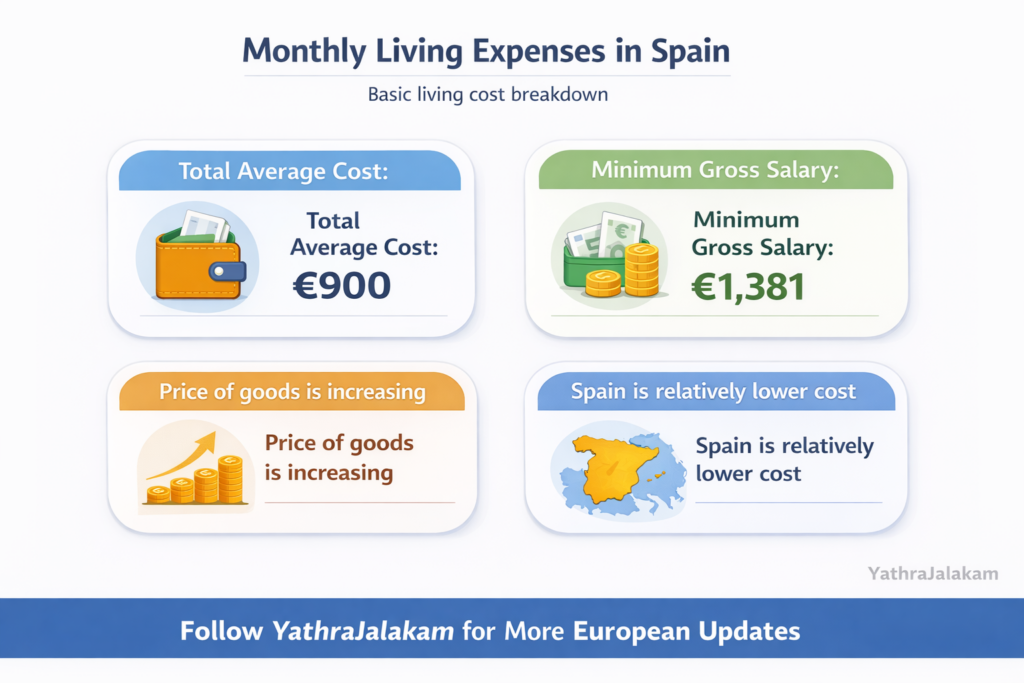
For non-tech jobs, salaries range from 18,000 to 28,000 Euros per year (15.8 to 24.6 lakh rupees) depending on the role and experience. The minimum wage in Spain for 2026 is around 15,876 Euros per year (approximately 14 lakh rupees).
While these numbers might seem lower compared to other European countries, remember that Spain’s cost of living is also proportionately lower. The work-life balance here is excellent – something we really value.
How is Work Culture in Spain Different from India?
Work culture in Spain is refreshingly different from the high-pressure environments common in Indian IT companies or startups. Spanish people believe in working to live, not living to work. There is a clear boundary between work and personal life.
Working hours are typically 9 AM to 6 PM with a lunch break. Some companies still follow the siesta tradition, though it is becoming less common in big cities. Overtime is not glorified here like it sometimes is in India. When work hours end, people go home to their families and personal lives.
Annual leave is generous – usually 22 to 25 days plus public holidays. People actually take their vacations, unlike in India where many let their leave lapse. This emphasis on life quality is something we have grown to appreciate deeply.
How is the Healthcare System in Spain?
Spain’s healthcare system is one of the best in the world. Seriously. The World Health Organization consistently ranks it among the top 10 globally. Both public and private healthcare are excellent here.
Public hospitals in Spain are like private hospitals back in India – modern, well-equipped, with advanced technology. The only challenge we faced in public hospitals was language. Most staff speak only Spanish. Private hospitals have more English-speaking staff, which can be helpful for Indians who have not yet mastered Spanish.
All Spanish nationals and residents get a health card issued by the government. With this card, treatment at government hospitals is completely free. All tests, treatments, even surgeries – everything is covered. We were amazed by this when we first experienced it.
You can also get private health insurance if you want. It costs around 50 to 100 Euros per month (4,400 to 8,800 rupees) depending on coverage. With private insurance, you get access to private hospitals with no waiting time and usually English-speaking doctors.
The quality of care is exceptional. Doctors, nurses, and staff treat patients with respect and patience. Coming from India where healthcare can be a mixed bag, this was a pleasant surprise for us.
📌 Official Resource: Information about registering for public healthcare in Spain and obtaining your health card through the National Health System portal. Essential for all residents. Visit Official Website
How is Public Transport in Spain?
Public transportation in Spain deserves special mention. It is efficient, affordable, and connects the entire country beautifully. The national train company is Renfe, and it operates everything from local trains to high-speed bullet trains.
Most Spanish cities have excellent metro systems. Madrid’s metro is one of the largest in Europe. There are also trams (Metro Ligero) in some areas. For travel within a city, Cercanias trains work perfectly. For intercity travel, you have Media Distancia trains. For long-distance travel, high-speed AVE trains operated by Renfe, Iryo, and Ouigo connect major cities at speeds up to 310 km/h.
We love the train system here. A trip from Madrid to Barcelona (about 620 km) takes just 2.5 to 3 hours by AVE train. Compared to India where the same distance would take 8-10 hours minimum, this is incredible. The trains are clean, comfortable, and punctual.
Bus services are also extensive and affordable. Companies like ALSA operate routes across Spain and even to other European countries.
How Much Does Public Transport Cost in Spain?
For city transport, monthly unlimited metro passes cost around 54 Euros in Madrid (about 4,750 rupees) for zones A and B. Cercanias offers an Abono Recurrente pass for around 20 Euros (1,760 rupees) for three months of unlimited travel within a zone. These prices are very reasonable considering the quality and coverage.
For long-distance trains, booking in advance can save you a lot. A Madrid to Barcelona AVE ticket can cost anywhere from 25 Euros (if booked early) to 150 Euros (last-minute booking). Nobody tells you this but booking 2-3 months in advance can reduce costs by 60-70%.
- Metro monthly pass (Madrid Zone A): 54 EUR (~4,750 INR)
- Cercanias 3-month pass: 20 EUR (~1,760 INR)
- Single metro ticket: 1.50-2 EUR (~132-176 INR)
- Bus single ticket: 1.50 EUR (~132 INR)
- AVE train Madrid-Barcelona (advance booking): 25-60 EUR (~2,200-5,280 INR)
- AVE train Madrid-Barcelona (last minute): 100-150 EUR (~8,800-13,200 INR)
What is Spanish Food Like for Indian Taste Buds?
▶️ Watch Full Video:
Spanish cuisine is world-famous, and for good reason. It is diverse, flavorful, and very different from Indian food. Famous dishes include Paella (looks like biryani but tastes completely different), Tortilla (Spanish omelette), and Churros (fried dough pastry, often eaten with hot chocolate).
Spain has unique eating customs. The tapas culture is wonderful – when you order a drink at a bar, you often get a small plate of food free with it. This is especially common in Andalusian regions. In northern Spain, you find pintxos (pronounced pinchos) – small snacks served on bread.
Lunch is the main meal in Spain, usually eaten between 2-4 PM. Many restaurants offer “Menu del Dia” (Menu of the Day) – a set lunch including first course, main course, dessert, and drink for around 10-15 Euros (880-1,320 rupees). This is excellent value.
For Indians worried about vegetarian food – it can be challenging but not impossible. Spanish cuisine is very meat and seafood focused. However, cities like Madrid and Barcelona have plenty of vegetarian and even Indian restaurants. Right below our apartment, there is a Chinese restaurant, an Indian restaurant, and nearby a Japanese one. International food is widely available in cities.
Indian grocery stores are also available in major cities. We can get most Indian spices, lentils, rice, and even frozen Indian snacks. It is not as cheap as India, but it is accessible.
What Are the Famous Festivals in Spain?
Spain is a country of celebrations. There are national festivals celebrated everywhere, city-specific festivals, and countless local celebrations. Coming from India where we love festivals, we felt right at home with this aspect of Spanish culture.
National celebrations include Christmas and Easter, which are observed with great enthusiasm across Spain. City-specific festivals are incredible – Las Fallas in Valencia (where they burn massive artistic sculptures), La Tomatina (the famous tomato-throwing festival), Feria de Abril in Seville (week-long fair with flamenco and traditional dress), and San Isidro in Madrid (patron saint celebration).
Each region and even small towns have their own unique celebrations. These festivals are open to everyone – locals and foreigners alike. We have participated in several and always felt welcomed. The Spanish love to celebrate, and they love when others join in their celebrations.
The energy during these festivals is infectious. Streets fill with music, dancing, food, and joy. For Indians who might miss the festive spirit of Diwali or Holi, Spanish festivals provide a similar sense of community celebration.
Pros and Cons: Should Indians Move to Spain in 2026?
We have covered a lot of ground in this article. Let us bring it all together honestly. If you are sitting in India right now weighing whether to make the move, here is our straight answer.
Reasons to move to Spain (Pros):
- Safety — top 30 globally on the Global Peace Index, low crime rate, welcoming people
- Healthcare — free world-class public healthcare for all residents, no insurance bills for basics
- Work-life balance — 22 to 25 days annual leave actually used, clear boundaries between work and personal life
- Cost of living — significantly cheaper than Germany, UK, or Netherlands for a comparable lifestyle
- Weather — warm, sunny, four beautiful seasons without brutal northern European winters
- People — genuinely warm and welcoming, zero personal experience of racism in years of living here
- Festivals and culture — if you love celebrations, Spain will feel like a second home
- Digital Nomad Visa — a real and attractive pathway for Indian remote workers and freelancers
Reasons to think carefully before moving (Cons):
- Language barrier – this is serious and non-negotiable for working and living comfortably here
- Lower salaries – entry-level and mid-level salaries are noticeably lower than Germany or UK
- Fewer tech job options – Madrid and Barcelona have good opportunities but not on the scale of London or Berlin
- Bureaucracy – Spanish administrative processes are slow and paper-heavy, can be genuinely frustrating
- Smaller Indian community – 50,000+ is a real community, but nothing like the UK’s 1.8 million
Our honest verdict: Spain is a genuinely excellent choice for Indians who are willing to learn Spanish, value quality of life and safety over maximum salary, and want to build a real life in Europe rather than just maximise earnings. If you are a remote worker, a family person, or someone who wants to actually enjoy the country they live in – Spain is hard to beat in 2026.
If you are purely chasing the highest IT salary or want to live in a large established Indian community, look at Germany or UK first.
Frequently Asked Questions
Can I get a job in Spain without knowing Spanish?
For IT and tech roles in international companies, yes, you might find English-only positions, but they are limited and highly competitive. For most other jobs, Spanish is absolutely necessary. We strongly recommend learning Spanish before moving or being prepared to learn it intensively after arrival.
Is Spain cheaper than other European countries for Indians?
Yes, generally Spain is more affordable than countries like Germany, France, UK, Netherlands, or Switzerland. However, it is more expensive than India, though salaries are also proportionately higher. Southern Spanish cities are cheaper than Madrid or Barcelona.
How long does it take to get Spanish residency for Indians?
This depends on your visa type. Work visa holders can apply for residency after living legally in Spain for a certain period. Student visa holders have different rules. The process can take 2-6 months depending on the region and paperwork completeness.
Did you find this helpful? Share this with someone who is planning to move to Spain. Subscribe to our YouTube channel and follow us on Instagram for more information.