San Sebastian 3 Day Itinerary: Pintxos, Beaches & Basque Culture (From Madrid)
Daughter of the Bay of Biscay
If you are looking for the perfect 3 day San Sebastian itinerary, you have come to the right place. This is not a generic travel list – it is a real, family-tested guide that we put together after actually doing this trip from Madrid. San Sebastián (also called Donostia) is one of those rare cities where food lovers, beach lovers, and history lovers all feel equally at home. And if you are living in Spain, or planning a trip here from India, this Basque gem absolutely needs to be on your list.
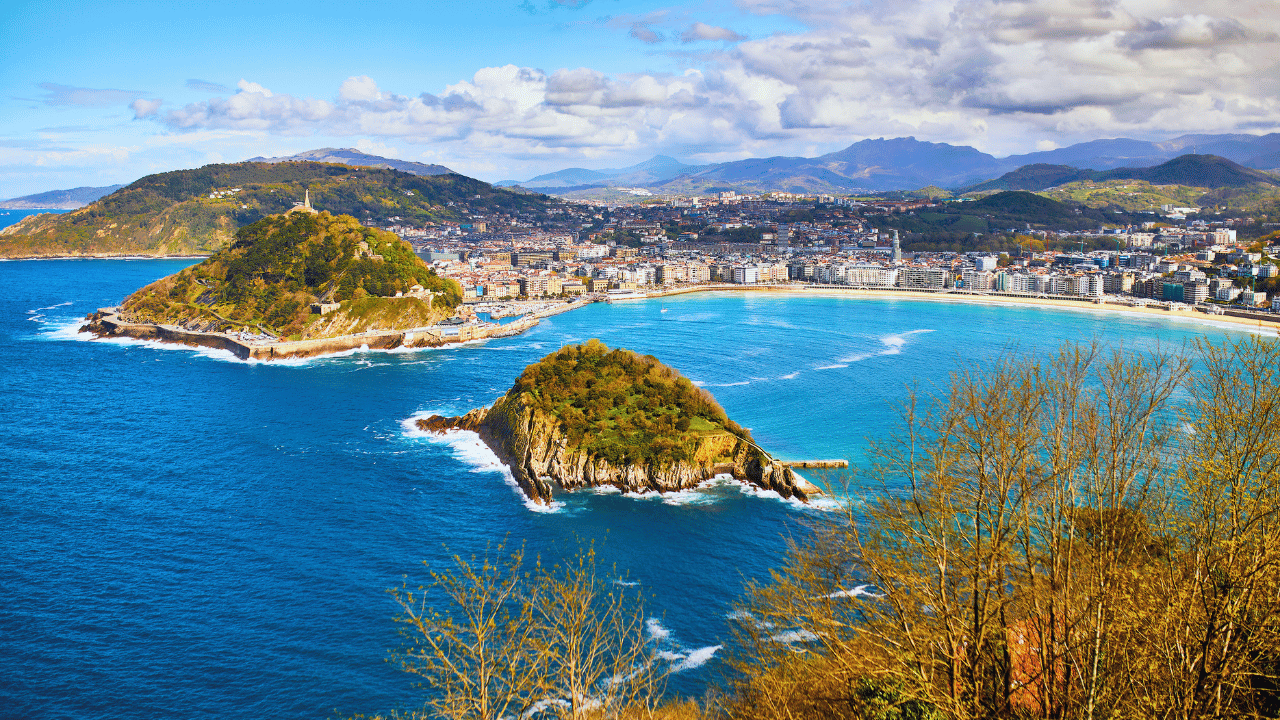
This journey begins from Madrid Chamartín and heads to the breathtaking city of San Sebastián in northern Spain – a beautiful town nestled between the Bay of Biscay and the towns of Pasaia and Orio. From the historical charm of its stone-paved old town to the iconic La Concha Beach, San Sebastián is truly special. With its natural beauty, distinctive food traditions, and unique Basque culture, this city stays with you long after you leave.
Whether you are a foodie chasing the world’s best pintxos and Basque cheesecake, a family looking for a relaxed coastal weekend, or an Indian expat in Spain wanting to escape Madrid for a few days – this 3 day San Sebastian itinerary covers everything you need.
Welcome to the Basque Country of Spain, where history lives on.
▶️ Watch Full Video :
Day 1 – Train Journey and First Impressions
Madrid Chamartín – 7 AM
At 7 in the morning, just as sunrise began over the city of Madrid, we started our trip from Chamartín train station on a Renfe train, the Spanish railway company. The views throughout the journey were beautiful.
Young plants beginning to grow together in the fields with fresh leaves, mustard fields blooming in the fullness of spring, and in the distance, mountains standing guard over all of this — what more do you need to bring peace to the mind? After a 5-hour train journey, we arrived in San Sebastián.
Lunch – Into Pintxo Culture
Since it was lunchtime, we walked to a very old local restaurant to eat. On both sides of the road stood buildings constructed in an ancient style. These were built centuries ago. They now house offices, apartments, hotels, and more. Beneath the bridge, the sea flowed on, enjoying itself. Benches have been placed along the walkways. You can sit there and enjoy this beauty for as long as you want.
🍡Pintxo – Pintxo Culture
Pintxos are small portions of food. People here buy one or two pintxos from one place along with a drink. After that, they move on to the next restaurant. The main purpose of this culture is to spend time with friends and family.
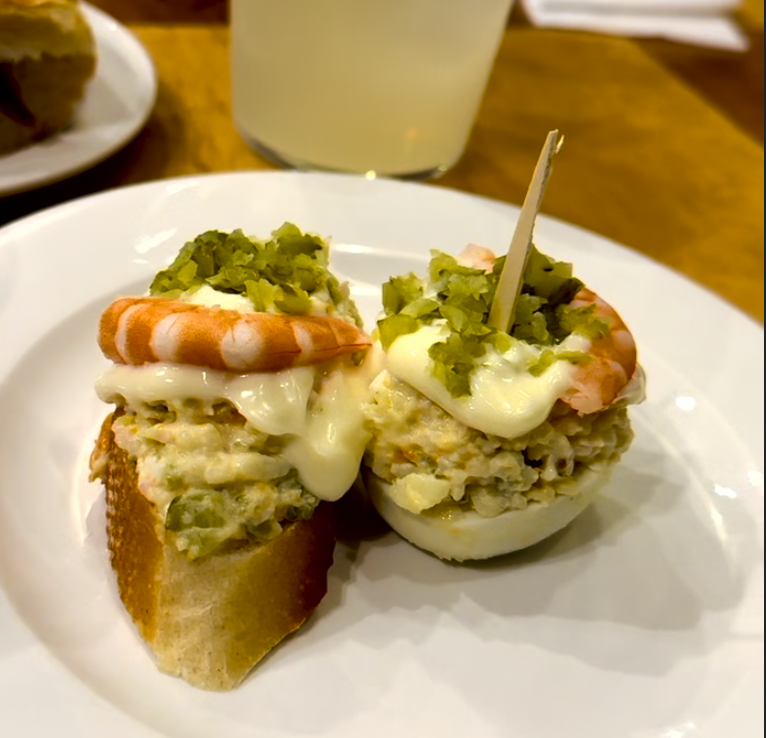
Enjoying the beauty of Basque architecture, we reached the restaurant. Different flavors of pintxos danced across our tongues. After saying goodbye to the French travelers and hotel staff we met there, we walked back to the hotel.
Zurriola Beach
After leaving our bags in the hotel room, we started walking again. The first place we reached was the beach. The sea stood there in all its beauty, its blueness undiminished. In the waves rushing in to touch the shore, children were practicing surfing. Since it was a cool but sunny day, there were also people swimming. Others were sitting and lying on the white sand, enjoying the day.
This is Zurriola Beach. It is the beach with the strongest waves among the three beaches of San Sebastián. San Sebastián is a city meant to be explored on foot. That way, you can enjoy every view without missing anything.
🏛 Old Town – Parte Vieja (Old Town)
Next, we arrived at the old town of San Sebastián — a place where history and culture come together. It is filled with countless restaurants, museums, places of worship, and all kinds of shops. Adding even more beauty to it is the sea, pressed close beside it.
In the old town stands the ancient Santa María Basilica, with its grand and majestic architecture. Its eye-catching carvings are its special feature. The way this old town has been built is deeply fascinating.
When you look straight ahead from in front of Santa María Basilica, you can see another major place of worship in San Sebastián — the Cathedral del Buen Pastor. This cathedral was built in the Neo-Gothic style between 1897 and 1899. Its architecture too deserves special mention.
As we kept walking along the stone-paved path, taking in the sights, the crowd also began to grow. Evening is important here for everyone.
Evening Pintxos
As hunger began calling out again in the middle of sightseeing, we returned once more to Basque flavors. Eating fresh pintxos filled with fish, prawns, and pork, and chatting with the locals who had come there, we too unknowingly became a small part of Basque culture. By then, the darkness had started to deepen.
Day 2 – Climbing the Hill and the Soul of La Concha
Breakfast – Antonio’s Tortilla
The next day, with a gentle chill in the air, we began our journey again. One of Spain’s important foods is tortilla, or Spanish omelette. We arrived at Antonio Restaurant, famous for its tortilla, for breakfast. A small piece of hot tortilla and a slice of bread were served. That taste had already settled equally into both our tongues and our minds.
What Makes the Tortilla at Bar Antonio Special
The secret behind the fame of Bar Antonio’s tortilla is simple – the sweetness of caramelized onions, slowly cooked over heat for more than 40 minutes. Each tortilla uses 35 eggs! From one such large tortilla, you get about 35 pintxo slices.
Along with onions, sweet red peppers are also added. Bar Antonio settles the long-running Spanish debate over whether onions or peppers should be added to tortilla by saying, “They should be!” Soft potatoes flowing together with slightly runny egg, set gently inside a hot pan, creating a texture that is soft within and crisp on the outside – that is what gives this tortilla its life.
Tortilla is available only from 9 AM to 12 PM. This bar, hidden in the city area and located outside the main tourist zone, offers a more authentic local experience.
This bar, which has received the Repsol Guide “Solete” award since 1995, also serves many signature pintxos besides tortilla – such as Prawn Ravioli in Martini Sauce, Oxtail Crisp, and Scallops with Truffle Cream.
Monte Urgull
From there, we walked again toward other city views. At every hour, this city has a different kind of beauty. As the day begins, the beauty remains just as strong, standing with the blue sea and its waves. Tourists, locals, and even puppies along the shore all lose themselves in this beauty of nature.
A little farther away, we could see a large monument on top of a hill. We walked toward it. This is a special landscape where sea and mountain stand together. The hill we saw in the distance was Monte Urgull, and the monument on top was of Jesus.
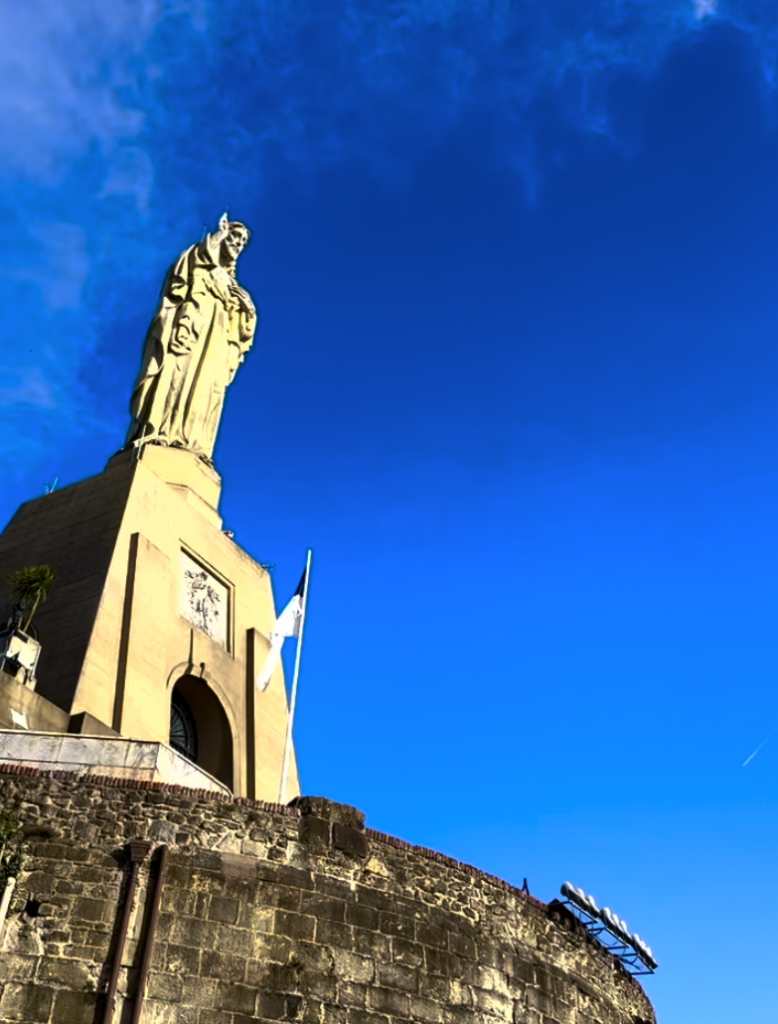
Sagrado Corazon de Jesus
There is a fortress built long ago to watch for enemies arriving by sea – Castillo de la Mota. On top of this castle stands the statue of Jesus we saw earlier. It is 12.5 meters tall. This statue is known as Sagrado Corazón de Jesús, or the Sacred Heart of Jesus.
From Monte Urgull, you can see the city below, the sea, and the distant mountains. There are several paths to reach the top of this hill. All of them lead to the same place.
The return walk was unforgettable. Plants blessed richly by spring. Flowers in many colors filled the place and delighted the eyes. Between pine trees that have witnessed countless changing seasons, you can see the sea. The blue sky, the flowers spread like a feast, the clusters of tender green leaves, and the sea painted between the slender pine branches – that beauty is beyond words.
La Viña – Basque Cheesecake
Coming down from the hill, we went straight to La Viña restaurant, famous for its traditional Basque cheesecake. We tasted their special pintxos and cheesecake. This cheesecake will always stand out. Many travelers come there just to taste it.
What Makes the San Sebastian Cheesecake at La Viña Special
Basque cheesecake was created around 1990 by Santiago Rivera. Since it is baked at high heat, the top becomes caramelized while the inside remains creamy, with a custard-like texture.
At La Viña, founded in 1959 by brothers Eladio and Antonio Rivera, Santiago Rivera decided in the 1990s to rethink the dessert menu. After months of effort, a unique cheesecake was created – a dark, sticky outer layer and a soft, velvety interior. This cheesecake has no biscuit base and no garnish at all.
What sets it apart from other cheesecakes?
Just 5 ingredients. No biscuit base. No berry coulis. No ice cream. This dessert, served over the bar counter with just a fork, is charming in its simplicity. The limited kitchen space is what kept it this pure.
While the top is deeply browned and crisp, the inside has the texture of soft custard – this contrast is why some of the world’s most famous chefs and travelers make a pilgrimage here. Copycat versions exist in London, Tokyo, Istanbul, and New York, but the original La Viña version never changes.
Along La Concha – Paseo de La Concha
After a satisfying lunch, we went to the beach. Boats were there for sea rides. There were also piers built so people could step down into the sea. Many people were sunbathing on the pier. We climbed onto that pier too. The sea was crystal clear. Sitting there, you can also see the nearby island.
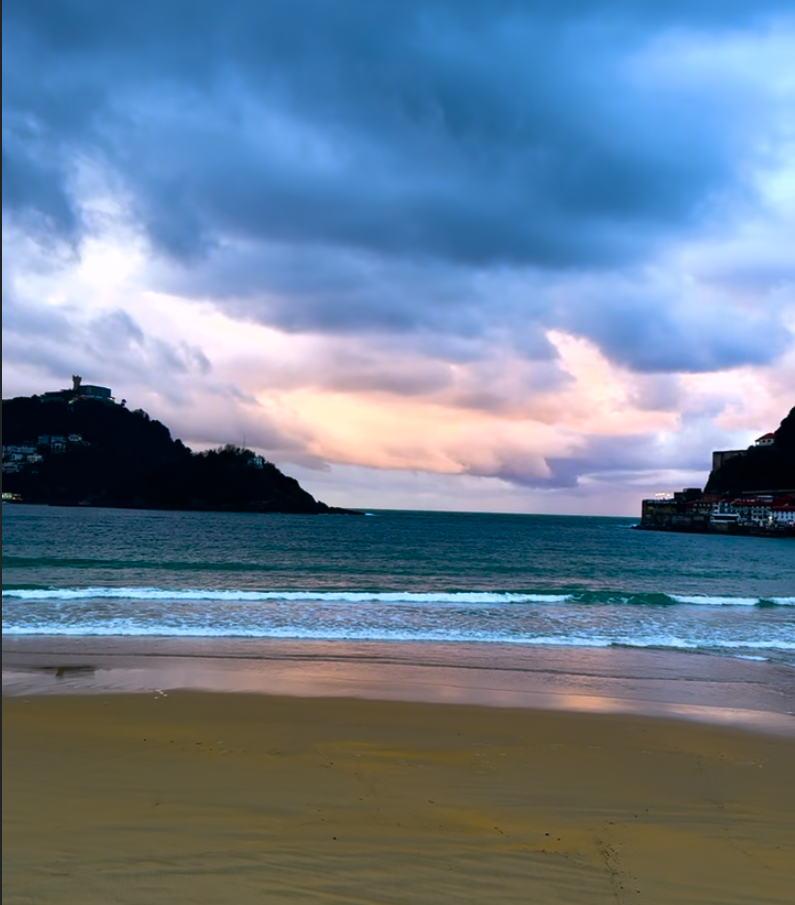
After spending some time there, we continued walking along Paseo de las Tres Playas, or the walkway of the three beaches. Along the way, there were piers and stone steps leading down into the sea. Through the mild afternoon sun, we kept walking, watching the busy sea views and the scenes along the shore.
Peine del Viento – The Comb of the Wind
We continued our journey through a structure with many pillars curving along the beachside. From time to time, we stepped down into different parts of the shore and enjoyed the beauty there. Each spot offered a different view. After about an hour of walking, we reached the famous Peine del Viento sculpture, or Comb of the Wind, one of the most celebrated landmarks of La Concha Beach. This sculpture, created by Eduardo Chillida, was installed in 1977.
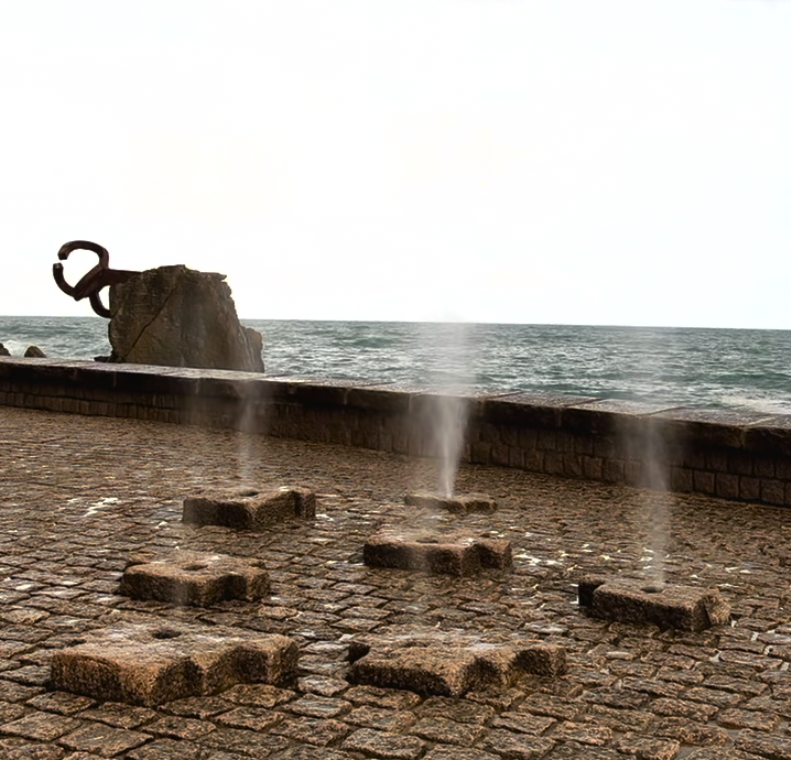
Palacio Miramar – Miramar Palace
After that, we went to Palacio Miramar, built in 1893. Until the beginning of the twentieth century, the Spanish royal family used to spend their summers here. Now this palace is used for the summer classes of the Basque University.
Evening – Friday Evening in Donostia
From there, we made our way back toward the old town. On the way, we also watched a performance by a few dancers. In the receding tide, the evening sun, the crowd in the city streets, and their dancing, you can see the soul of San Sebastián culture.
Since it was Friday, the city had a different kind of energy in the evening. Locals celebrate the weekend with their families. The night becomes one of joy and excitement. Our day ended with fresh pintxos for dinner.
Day 3 – Into the Heart of the Sea – The Journey Ends
Boat Trip Along La Concha
After witnessing another morning in San Sebastián, we started our journey again. We were now heading into the heart of the sea that had enchanted us with its beauty over the past two days. A boat trip along La Concha – one of the most beautiful bays in Europe. For one hour, we sailed while taking in all the important sights along the coast.
The boat tour costs approximately €10 to €15 (₹920 to ₹1,380) per person for the one-hour trip. You can buy tickets directly at the port or along Paseo de la Concha – during peak season (June to August) it is worth booking in advance or arriving early as spots fill up quickly. In the off-season, walk-up tickets are usually no problem.
A little puppy joined us to enjoy the beauty of the sea. At that moment, everyone seemed to be moving to the rhythm of the sea – passengers, puppy, and all.
Funicular de Igueldo – Igueldo Cable Car
After the boat trip, we took the Funicular de Igueldo, the cable car ride up Mount Igueldo. This little funicular has been running since 1912 and is a charming experience in itself. The cable car helps you reach the very top of the hill.
Tickets cost approximately €4 to €5 (₹370 to ₹460) one way or €6 to €8 (₹550 to ₹735) return. At the top, there is a small amusement park (separate entry charge) and a lighthouse built in 1855. Operating hours vary by season – in summer (July to August) it typically runs from around 10 AM to 9 PM, while in winter hours are shorter and the funicular may be closed on some weekdays. Always check the official schedule before you go, especially if you are travelling outside summer.
From here, you can see La Concha Beach in its entirety. Surrounded by hills richly spread with greenery, La Concha Beach shines beautifully in the sunlight. The joy of that view alone is enough to make you forget all stress and reach the peak of peace. After enjoying all that beauty, we came back down in the cable car and walked back the way we had come.
Return Journey – Goodbye, Donostia
At around five in the evening, with so many memories engraved in our minds, we boarded a Renfe train from San Sebastián back to Chamartín.
Journeys and sights never really end. They continue on and on. We will return again with memories of another journey.
How to Reach San Sebastián? – Travel Options
Train – The Most Recommended Option
This is how we travelled, and honestly, it is the best way to do this trip. The Renfe train from Madrid Chamartín to San Sebastián takes approximately 4 hours 45 minutes to 5 hours depending on the service. The views along the way – mustard fields, green valleys, distant mountains – are half the experience.
Train tickets range from around €25 (₹2,300) to €75 (₹6,900) depending on how far in advance you book and which class you choose (Básico, Elige, or Prémium). Our strong advice: book 2 to 3 weeks in advance on the Renfe website to get the best prices. Last-minute tickets can cost significantly more. There are around 10 train services a day, so you have good flexibility on timing.
All Renfe long-distance trains come with AC, power sockets, free WiFi, and a buffet carriage – very comfortable for a family trip.
To book tickets:
- Renfe Official Website: www.renfe.com/es/en
- Trainline (English): thetrainline.com – Madrid to San Sebastian
- Omio: omio.com – Madrid to San Sebastian Train
Bus (ALSA) – The Most Budget-Friendly Option
If you want to save money, the ALSA bus is the way to go. Tickets typically cost between €15 (₹1,380) and €30 (₹2,760). There are 17 services a day from Madrid Avenida de América bus station. The bus has Wi-Fi, entertainment, footrests, and a WC. The first luggage item up to 20 kg is free. Journey time is longer – expect around 5 to 6 hours.
To book tickets:
- ALSA Official Website: alsa.com – Madrid to San Sebastian
Flight – The Fastest Option
A direct flight from Madrid Barajas (MAD) takes about 2 hours 40 minutes. However, keep in mind that San Sebastián Airport is located in Hondarribia, very close to the French border – quite far from the city centre. By the time you add airport transfers on both ends, the total travel time is not much shorter than the train. For a 3 day trip, the train is a far better experience.
Private Car
The distance from Madrid is 452 km (281 miles) and the drive takes about 4 hours 30 minutes. Important note: parking inside San Sebastián is very limited and expensive. If you drive, you will need to use a paid garage – budget around €20 to €30 (₹1,840 to ₹2,760) per day for parking. For a short city trip, car-free travel is much easier.
Estimated Budget for 3 Days in San Sebastian
One thing I wish I had found before our trip was a clear cost breakdown. San Sebastián has a reputation for being expensive, but the reality is more nuanced – the food is surprisingly affordable if you eat pintxos style, and many of the best sights are completely free. Here is a realistic picture of what to expect.
This is also worth reading alongside a general cost of living in Spain overview if you are planning a longer Spain trip.
| Category | Budget Option | Mid-Range Option |
|---|---|---|
| Train from Madrid (return) | €50–60 (₹4,600–5,500) | €100–150 (₹9,200–13,800) |
| Accommodation per night | €60–80 (₹5,500–7,350) | €100–150 (₹9,200–13,800) |
| Food per day (pintxos + meals) | €25–35 (₹2,300–3,200) | €50–70 (₹4,600–6,440) |
| Funicular de Igueldo (return) | €6–8 (₹550–735) | €6–8 (₹550–735) |
| Boat tour along La Concha | €10–15 (₹920–1,380) | €10–15 (₹920–1,380) |
| Attractions (most are free) | €0 | €0–20 (₹0–1,840) |
| Total for 3 days (per person) | €300–400 (₹27,600–36,800) | €500–800 (₹46,000–73,600) |
The values will depend on the current exchange rates and prices.
A few things worth knowing before you go. Pintxos are typically €2 to €4 (₹185 to ₹370) each, so you can eat very well without spending much if you graze through the old town bars the way locals do. Monte Urgull, Peine del Viento, La Concha Beach, and Miramar Palace gardens are all free to visit. The big costs are accommodation and transport – get those booked in advance and you will be fine.
Where to Stay in San Sebastian
Choosing the right area to stay makes a big difference in how you experience the city. San Sebastián is compact and walkable, but each neighbourhood has its own character.
Parte Vieja (Old Town) – This is where you want to be if pintxos and atmosphere are your priority. You are right in the middle of all the action – restaurants, bars, Santa María Basilica, and the Monte Urgull trailhead are all within a few minutes’ walk. It gets lively in the evenings, so light sleepers should keep that in mind.
Gros / Zurriola Beach area – A slightly more relaxed neighbourhood just across the river from the old town. This is where Zurriola Beach is – popular with surfers and younger crowds. A good option if you want a bit more quiet while still being close to everything.
Centro (City Centre) – If La Concha Beach views are your dream, the Centro area is the place. Hotels here tend to be mid-range to higher end, but the location along the beachfront promenade is hard to beat.
A few practical tips before you book. Parking in San Sebastián is expensive – if you are driving, expect to pay €20 to €30 (₹1,840 to ₹2,760) per day for a garage. For summer visits (June to August), book your accommodation at least 2 to 3 weeks in advance – the city fills up fast during peak season. Spring and autumn are easier for last-minute bookings and generally cheaper.
Tips for Indian Travelers Visiting San Sebastián
San Sebastián is a wonderful destination for Indian and Malayali visitors, but a few things are worth knowing before you go. If you want a broader view of how Spain works for us, check out this piece on Is Spain good for Indians.
Vegetarian food: Options exist but are limited compared to what we are used to. The safest bets are cheese pintxos, and patatas bravas (fried potatoes with sauce). When ordering, ask for “sin carne” (without meat) or “sin pescado” (without fish). Staff in the old town tourist areas generally understand basic English. Do not assume something is vegetarian just because it looks like it – many pintxos contain anchovies or ham.
Halal food: Halal options are scarce in San Sebastián. Plan accordingly if this is important for you.
Payment: Credit and debit cards (including Indian cards on Visa and Mastercard networks) are widely accepted everywhere, including small pintxos bars. Carrying a small amount of cash is still a good idea for very traditional spots.
Language: Spanish is spoken everywhere, and English is understood in most tourist areas. San Sebastián is in Basque Country, so you will also see Euskara (the Basque language) on signs and menus. Learning “Eskerrik asko” (thank you in Basque, pronounced es-KER-ik AS-ko) will earn you a genuine smile from locals.
Weather: San Sebastián is noticeably cooler and wetter than Madrid. Even in summer, evenings can be cool. Pack a light jacket or layer – you will thank yourself later. We visited in spring and the mornings were quite chilly even when the afternoon was pleasant.
Getting around: The city is small and best explored on foot. You do not need a car or even much public transport if you are staying in or near the old town.
Best Time to Visit San Sebastián
One important tip first: in San Sebastián, there is usually a drizzle on almost half the days of the year. That is just part of life here in the Basque Country – do not let it put you off. The locals certainly do not, and neither should you.
Summer (June to September) – This is peak season and for good reason. Temperatures are pleasant – typically 20°C to 25°C – and the beach is at its best. La Concha fills up with swimmers and sunbathers, the outdoor terraces are buzzing, and the city has a wonderful festive energy. The downside: crowds are at their highest and accommodation prices peak. Book everything in advance.
Spring (March to May) – Our personal favourite time to visit. Crowds are much lower, temperatures are mild (15°C to 20°C), and the city feels more like a place where real people live rather than a tourist destination. You may get some rain, but the green hills and blooming flowers more than make up for it. This is when we visited, and the walk down Monte Urgull was absolutely stunning.
Autumn (September to November) – A great time for food lovers. October brings the San Sebastián Gastronomika festival, one of the most important culinary events in Europe. The city draws world-class chefs and food enthusiasts from everywhere. Temperatures drop gradually from around 20°C in September to 12°C by November.
Winter (December to February) – Quiet, rainy, and honestly quite cozy. The tourist crowds vanish almost completely, prices drop, and the pintxos bars become warm refuges on cold evenings. If beaches are not your priority and you are mainly there for the food and architecture, winter is a very underrated time to visit.
San Sebastián sees more than 150 rainy days per year on average, so whatever season you choose, pack a compact umbrella or a light waterproof jacket. And remember – if food is your main goal, any month is perfect.
One important tip: in San Sebastián, there is usually a drizzle on almost half the days of the year – it is part of life here. If food is your goal, any month is perfect!
Things to Do in San Sebastian – Quick Reference
Here is a quick overview of everything we covered in this 3 day itinerary, with cost and practical notes at a glance.
| Attraction | Approximate Cost | Practical Notes |
|---|---|---|
| La Concha Beach | Free | Best in summer; calm waves, ideal for families |
| Zurriola Beach | Free | Strong waves; popular with surfers |
| Monte Urgull hike | Free | Multiple paths up; Jesus statue at top; great city views |
| Old Town pintxos tour (self-guided) | Free to walk; €2–4 (₹185–370) per pintxo | Best in the evening; hop between bars like locals do |
| Bar Antonio tortilla | €3–5 (₹275–460) per slice | Available only 9 AM to 12 PM; worth the early start |
| La Viña Basque cheesecake | €5–7 (₹460–645) per slice | Just 5 ingredients; go before it sells out |
| Peine del Viento sculpture | Free | Eduardo Chillida’s iconic 1977 sculpture at beach end |
| Miramar Palace gardens | Free | Former royal summer residence; lovely sea views |
| Boat tour along La Concha | €10–15 (₹920–1,380) per person | Approx. 1 hour; buy tickets at Paseo de la Concha |
| Funicular de Igueldo | €6–8 (₹550–735) return | Seasonal hours; amusement park and lighthouse at top |
| Santa María Basilica | Free | Stunning Baroque architecture in the old town |
| Cathedral del Buen Pastor | Free | Neo-Gothic; built 1897–1899 |
San Sebastián – A City That Never Leaves Your Heart Once Seen
Journeys and sights never really end. This Basque city, where sea, mountains, history, and food culture come together, will make you want to return once you have visited it even once. We will come back again with memories of another journey!
Did you find this blog post helpful? Follow our blog for more Spain travel tips. Share your San Sebastián experiences in the comments!
Frequently Asked Questions (FAQ)
What is the best time to visit San Sebastián?
The summer months from June to September are ideal for the beach and open-air events. Spring (March- May) is excellent for enjoying the city without the full crowds.
How can I travel from Madrid to San Sebastián?
A Renfe train journey from Chamartín station takes about 5 hours. This is the most comfortable and scenic option.
What is a Pintxo?
Pintxo is a signature food style of the Basque region. It is a snack served in small portions, usually with different toppings placed on a piece of bread. The local style is to walk from bar to bar and enjoy them.
Do I need to book the La Concha boat tour in advance?
During tourist season (June–August), advance booking is recommended. In the off-season, tickets are usually available directly at the beach.
Does the Funicular de Igueldo cable car run every day?
The funicular runs regularly, but the schedule may vary depending on the season and weather. Check the official website before your trip.
Can San Sebastián be fully explored on foot?
Yes! San Sebastián is a city that is perfect to explore on foot. The beaches, old town, lighthouse, and sculptures can all be covered in one long walk.
Enjoyed this itinerary? Share it with someone planning to visit Spain. Subscribe to our YouTube channel and follow us on Instagram for more real travel experiences.