In Spain the whole healthcare system works differently, compared to healthcare system in India. and after years of living in Spain and handling every bit of this ourselves without any agent or consultant, we want to give you the plain, honest version.
Is Healthcare in Spain Really Free for Indians?
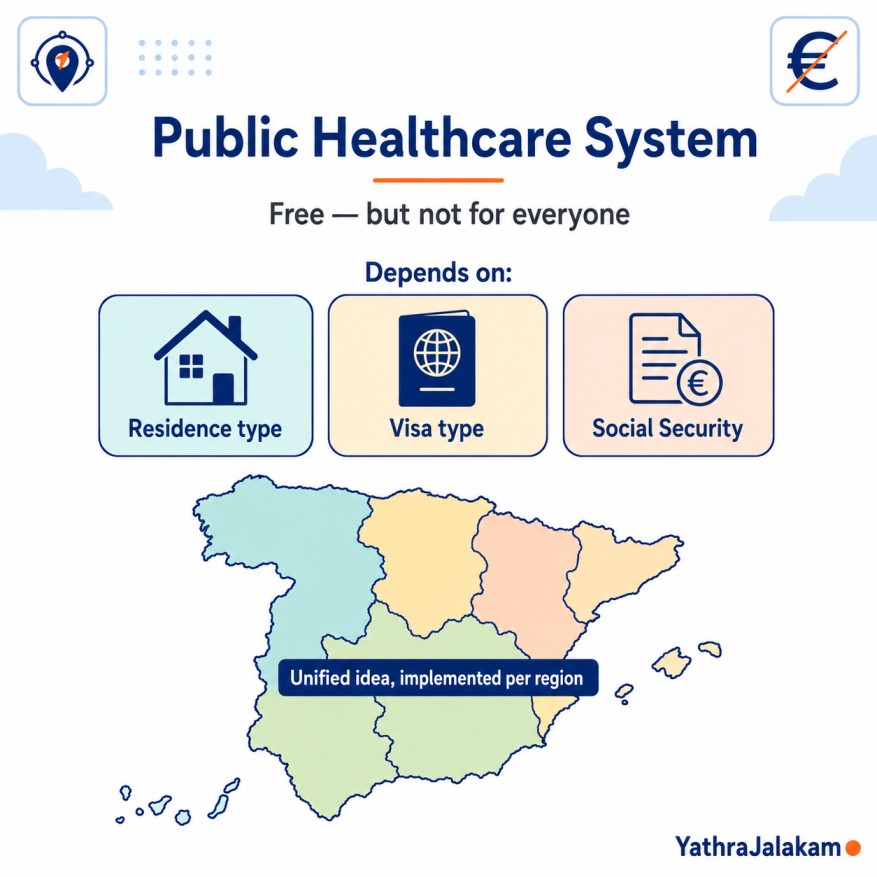
Here is the direct answer: public healthcare in Spain is not automatically free for everyone. It is free at the point of use, but only if you have earned the right to it. Whether you qualify depends on your visa type, your residency status, and most importantly whether you are paying social security contributions. If you work legally in Spain and social security is deducted from your salary, you and your dependent family get access to the public system without paying at the counter. If you are here on a student visa or as a non-working resident, the story is different, and we will get to that below.
▶️ Watch Full Video👇
The reason it feels free is that it is paid for in advance, quietly, out of everyone’s taxes and wages. Roughly 6.35% of an employee’s salary goes toward social security, and a chunk of that funds the health system. So you are pre-paying through your payslip. Once you understand this, the whole system stops feeling confusing. If you do not understand this and expecting free everything and did not budget for the ga, you will be in struggle. People who moved through agents were often told “Spain has free healthcare” and left it at that, then panicked when a pharmacy or a dentist asked for money.
Public Healthcare in Spain
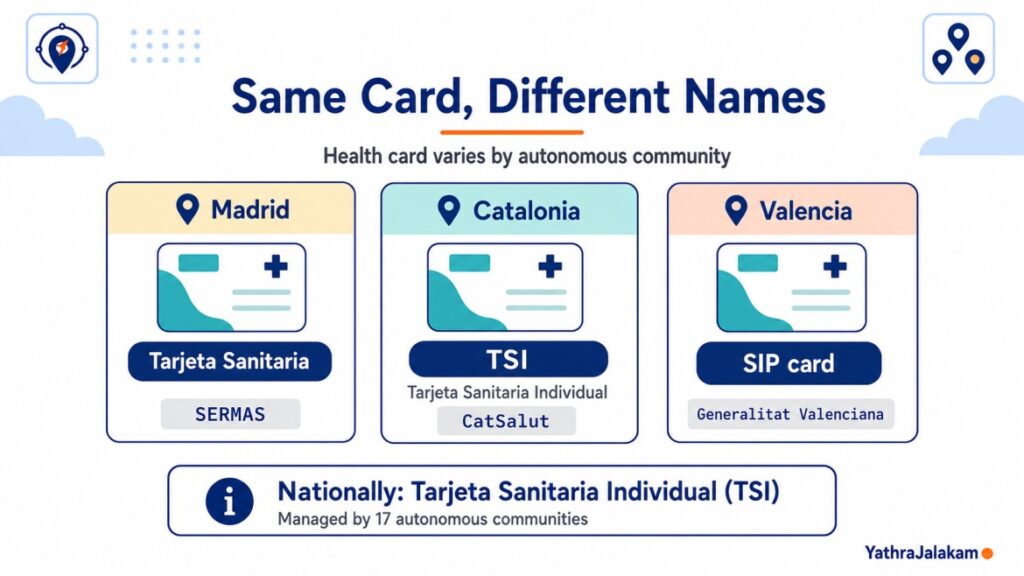
One more thing worth knowing early: Spain has a national framework, but each autonomous community actually runs its own. That means the office names, the health card, the appointment app, and even the application steps change from city to city. We live in Madrid, so everything we describe here is the Madrid (SERMAS) version. If you land in Barcelona or Valencia, the idea is identical but the app and card name will look different. This is the same pattern we explained in our post on the harsh reality of student life in Spain – the rules are regional, so always check your own community.
How Do You Get the Tarjeta Sanitaria?
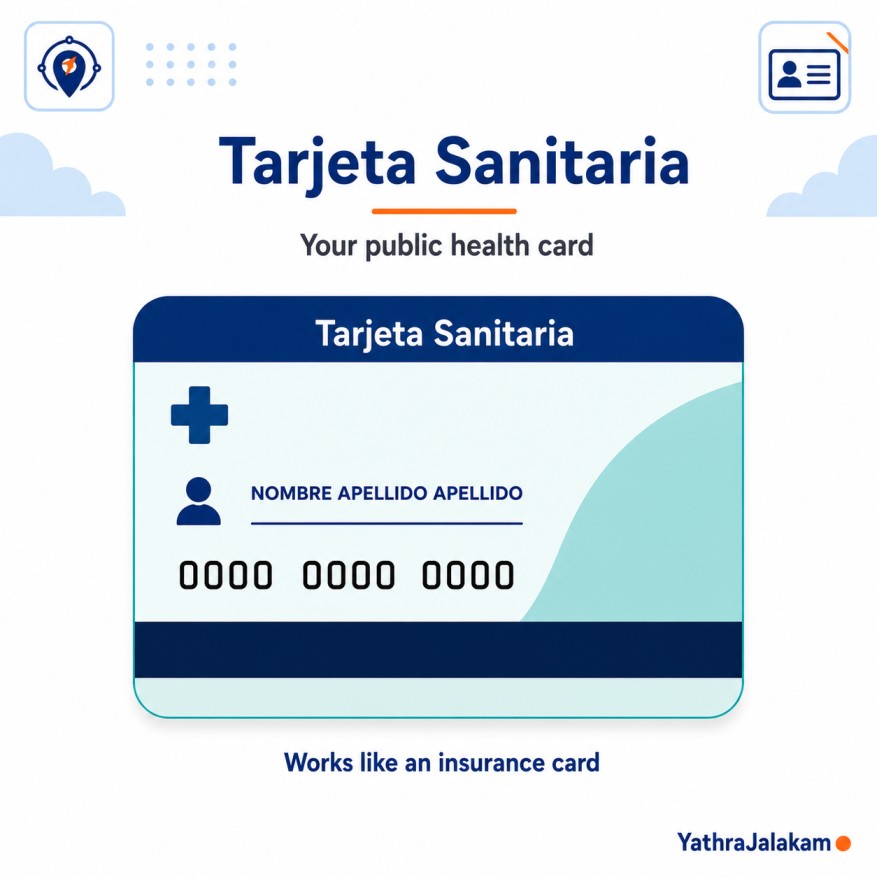
To actually use the public system you need a health card called the Tarjeta Sanitaria (in Madrid, the Tarjeta Sanitaria Individual or TSI). This little card is the key to everything. It holds your medical records, links you to a family doctor, and lets you buy prescription medicines at a big discount. Without it, the public system is basically closed to you even if you technically qualify.
The application is done in person at your assigned Centro de Salud, which is the neighbourhood health centre closest to your registered address. When we applied, we carried our documents, submitted them at the admin desk, and were given a temporary paper the same day so we were covered immediately. The plastic card itself arrived in a couple of weeks. Here is exactly what you need to bring:
Spain Health Card
Your Empadronamiento (the residence certificate from your local town hall proving where you live).
Valid ID – your NIE or TIE card.
Proof that social security recognises you as insured (through your job, or the relevant INSS document).
Then you submit everything at your nearest Centro de Salud and wait for verification.
After they verify your papers, the physical card usually reaches your home within two to four weeks. In Madrid you can also activate the Tarjeta Sanitaria Virtual on your phone, which shows your card digitally so you are not stuck if the plastic one is delayed. We sorted our social security number first, because that is the step most people underestimate – we walked through it in our visa and immigration FAQ for Spain if you want the paperwork detail.
📌 Official Resource: Full Tarjeta Sanitaria rules and application guide for Madrid (SERMAS). Visit Official Website
What Does Public Healthcare Actually Cover?
This is where Spain genuinely shines. Public hospitals here have excellent facilities and seriously good doctors, and once you are in the system, almost everything is covered – GP visits, specialist referrals, blood tests, scans, hospital stays, and surgery. The one everyday cost you keep paying is your share of prescription medicines. For working-age adults that copay is typically around 40% of the medicine price (it scales with income), while pensioners pay only about 10%. A 2026 reform is also capping charges for low-income residents at roughly €8.23 a month (approx. ₹900), so it is getting friendlier.
The way it works at the pharmacy is neat: your doctor writes the prescription digitally onto your card’s code, you show the Tarjeta Sanitaria at any pharmacy, and they instantly see exactly what you were prescribed. Because of the card discount, you end up paying only a small fraction of the real price. Here is roughly what is in and out:
Covered but basic: dental check-ups and preventive dental care.
Not covered: most of the medicine cost (you pay your copay), plus dental treatments like crowns and braces.
Two practical realities to prepare for. First, most doctors and staff at public centres speak only Spanish. We managed the early months with a translation app on the phone open on the table, and it worked perfectly fine – the staff are used to it and patient about it. Second, a routine appointment can sometimes be a week or more away. But if something urgent happens, you do not wait – you walk into the Urgencias (emergency) section of the Centro de Salud or a hospital without any appointment, and they treat you based on how serious your condition is. That safety net is real and it is fast when it matters.
Do Indian Students Get Free Healthcare in Spain?
This is the part that trips up the most people, so read it carefully. Students on a study visa usually cannot directly tap the public health funding the way an employed person can, because they are not contributing to social security through a salary. That is exactly why Spanish consulates make private health insurance mandatory at the time of the student visa application. But non-EU students in Spain who have a legal part-time employment contract may be eligible for a Tarjeta Sanitaria Individual (TSI). Their employer registers them with the Spanish Social Security system (Seguridad Social) when they begin working.
So the honest picture for most Indian students is: you arrive relying on private insurance, and you keep it for the length of your studies. This is not a scam or an extra tax – it is genuinely how the system is built for your category. The students who struggle are almost always the ones who bought the cheapest possible policy just to clear the visa, then discovered it did not cover what they actually needed. We break down this and the real monthly numbers in our cost of living in Spain guide, and it is worth reading before you pick a plan.
If you later switch from a student visa to a work visa and start paying social security, you graduate into the public system automatically, and then you can apply for your Tarjeta Sanitaria like any employee. Many of our friends went exactly this route – study, then work, then public healthcare – and it is a completely normal path. The jobs that make that jump easiest are the ones we listed in our piece on high-demand jobs in Spain for Indians.
📌 Official Resource: Spanish social security (TGSS) – who is covered and how contributions work. Visit Official Website
Is Private Insurance Like Adeslas Worth It?
Spain has a big, competitive private market, and the two names you will hear most are Adeslas and Sanitas. Without insurance, walking into a private hospital means paying out of pocket, and it adds up fast – a private GP consultation can run €40 to €80 (approx. ₹4,400 to ₹8,700). But with a policy, private care buys you two things the public system cannot always give: much faster appointments and English-speaking doctors.
For a healthy adult in their thirties, a proper no-copay plan in 2026 costs roughly €55 to €70 a month (approx. ₹6,000 to ₹7,600) with Adeslas and around €65 to €85 (approx. ₹7,100 to ₹9,300) with Sanitas. These plans cover blood tests, ultrasounds, scans, and specialist visits at no extra charge, though the exact coverage depends on the plan you pick, and private insurance almost never covers your pharmacy medicine bill. One honest warning we always give: for a student or non-lucrative visa you must buy the “sin copago” (no-copay) version. The cheaper copay plans look tempting but often get visas rejected.
We speak from real experience here. In our first year, while still learning Spanish, we took an Adeslas plan just for peace of mind. Then one of us needed oral surgery, and honestly it became the moment the insurance paid for itself several times over.
💬 For the oral surgery we did blood tests, an anesthesia allergy test, X-rays and even an MRI to measure the distance to the tooth nerve. Every single test and the surgery itself were fully covered on the Adeslas card. The only thing we paid for out of pocket was the antibiotics and painkillers afterwards.
Public or Private – Which Should You Pick?
You can compare and buy every one of these plans yourself, directly. Here is the side-by-side we wish we had seen early:
Feature
Public (SNS via Tarjeta Sanitaria)
Private (Adeslas / Sanitas)
Who qualifies
Legal workers, pensioners, dependents
Anyone who pays the premium
Monthly cost
Included in social security (approx. 6.35% of salary)
€55 to €85 (approx. ₹6,000 to ₹9,300)
Appointment speed
Can take a week or more
Usually within a day or two
Language
Mostly Spanish only
English-speaking doctors available
Emergencies
Excellent, walk in to Urgencias
Covered, but public is strong too
Medicines
Big discount via card
Usually not covered
Public or Private Healthcare in Spain
📌 Official Resource: Spain’s Ministry of Health – national system, coverage and your rights as a resident. Visit Official Website
Final Thoughts
Yes, the system feels confusing at first, and yes, each city does things slightly differently. But it is not a mystery locked behind a middleman. The public system is genuinely excellent once you are in it, private insurance is affordable and easy to buy yourself, and the emergency care will always treat you when it counts. Budget for your medicine copays, keep a translation app handy in the early months, and you will be fine.
Frequently Asked Questions
Is healthcare free in Spain for Indian residents?
It is free at the point of use only if you pay social security contributions through legal work, or qualify as a pensioner or dependent. Students and non-working residents generally need private insurance instead.
How long does the Tarjeta Sanitaria take to arrive?
You get a temporary paper the same day you apply at your Centro de Salud, and the plastic card usually get you in about two to four weeks. In Madrid you can also use the virtual card app in the meantime.
Do I have to pay for medicines in Spain?
Yes, you pay a share of prescription medicines, typically around 40% for working-age adults, but the Tarjeta Sanitaria discount makes it a small amount. Pensioners and low-income residents pay much less.
Which private health insurance is best for a Spain student visa?
Adeslas and Sanitas are the most common choices, and you must buy the no-copay (sin copago) version for the visa to be accepted. Expect roughly €55 to €85 a month (approx. ₹6,000 to ₹9,300).
Do doctors in Spanish public hospitals speak English?
Most public Centro de Salud staff speak only Spanish, so a phone translation app works well in the early days. If English matters to you, private plans usually offer English-speaking doctors.
Can I use public healthcare in Spain without paying tax?
Not directly, since access is tied to social security contributions or specific categories like pensioners. Non-working residents sometimes buy into the public system through the Convenio Especial, which costs around €60 a month (approx. ₹6,500) for under-65s.
Found this helpful? Share it with someone planning to move to Spain. Subscribe to our Life in Spain for Indians YouTube channel for real, honest videos about life in Spain – and follow us on Instagram for daily updates: Spain News for Indians.
On 12 August 2026, Spain saw its first total solar eclipse in over a century. Here is where totality passed, how much of the Sun each city lost, the exact viewing times, the safety rules that actually matter – and the two eclipses coming in 2027 and 2028.
Planning to move to Spain in 2026? Discover the real monthly cost of living in Spain including rent, food, transport and utilities. Essential guide for Indian students and Malayalam-speaking expats.
Plan your perfect San Sebastian trip with this 3 day itinerary. Covers La Concha beach, pintxos, Monte Urgull, Monte Igueldo, old town and more. Real experience from a family living in Spain.
Can you get Indian groceries in Spain in 2026? Yes, from rice to curry leaves. Here is exactly where Indians can buy everything, with real prices in rupees.
How long does it take to learn Spanish for Indians moving to Spain? Real experience from an expat family in Spain – grammar, pronunciation, practice tips and honest timelines.