Madrid Pope Visit Metro & Transport Changes 2026
Madrid Pope visit transport changes 2026 are very important to understand if you live in Madrid, work in the city centre, or travelling during the first week of June. Pope Leo XIV’s visit will bring major crowds, special security measures, Metro station closures, free EMT buses, extra services and real-time changes across Madrid’s public transport network.
Madrid’s transport system is usually very reliable, but during a major event around Plaza de Cibeles and Plaza de Lima, even a small journey can take longer than expected if you do not plan it properly.
What Is Changing During The Pope’s Visit?
The Community of Madrid has updated its special mobility plan for the visit of Pope Leo XIV. The main aim is to balance security needs with normal public transport operations, so that residents, pilgrims, tourists and workers can still move around the city as smoothly as possible.
The plan is being coordinated by the Madrid Regional Transport Consortium, known as CRTM, together with Metro de Madrid, EMT city buses, intercity buses and Cercanías. This is not just a normal weekend transport update. The authorities are preparing for large crowds around important event areas, especially Plaza de Lima and Plaza de Cibeles.
Central Madrid will still be connected, but your usual route may not be the best route on June 6, 7, 8 and 9. If you are staying near Sol, Gran Via, Retiro, Salamanca, Nuevos Ministerios, Cibeles or Bernabéu, you should keep extra buffer time.
📌 Official Resource: Comunidad de Madrid official transport update for Pope Leo XIV’s visit Visit Official Website
Which Metro Stations Will Be Closed?
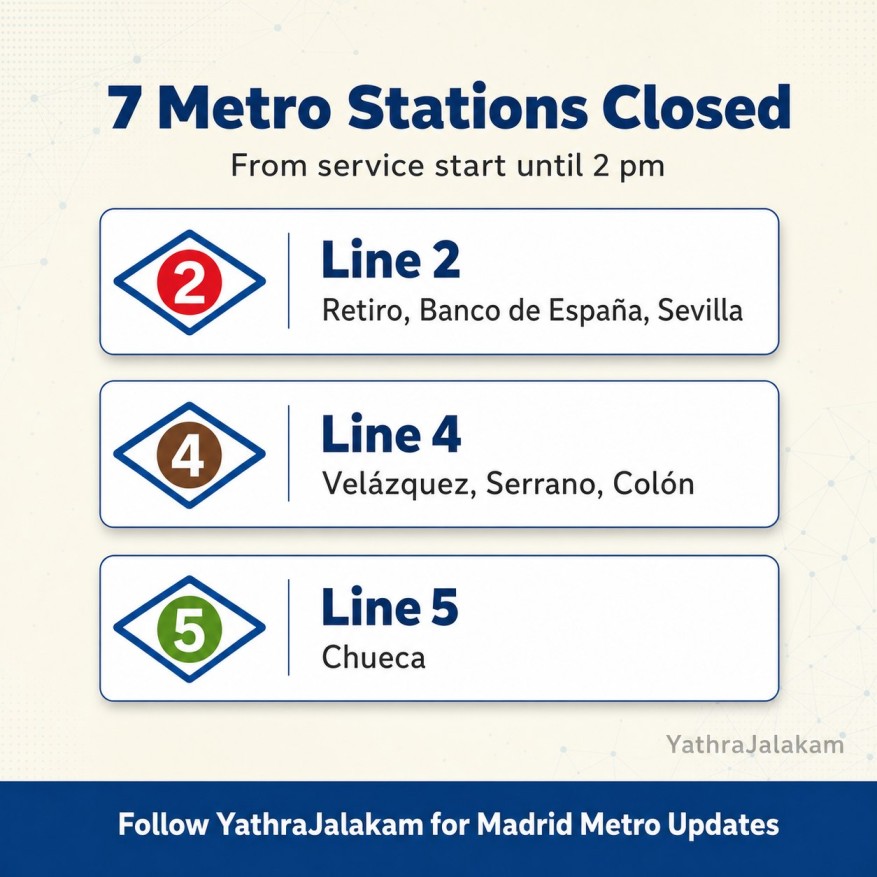
The biggest update for most people is the closure of seven Metro stations on Sunday, June 7, 2026, when the Holy Mass will be celebrated at Plaza de Cibeles. These stations will be closed from the start of service until 2:00 PM for security reasons.
The affected stations are Retiro, Banco de España and Sevilla on Line 2, Velázquez, Serrano and Colón on Line 4, and Chueca on Line 5. When required, trains may continue moving through these stations without stopping. So even if the line is running, do not assume you can get down at these stations.
| Metro Line | Closed Stations | Closure Time | Reason |
|---|---|---|---|
| Line 2 | Retiro, Banco de España, Sevilla | Start of service to 2:00 PM on June 7 | Security around Plaza de Cibeles Mass |
| Line 4 | Velázquez, Serrano, Colón | Start of service to 2:00 PM on June 7 | Security and crowd control |
| Line 5 | Chueca | Start of service to 2:00 PM on June 7 | Security and passenger flow management |
Practical suggestion: use stations slightly outside the closed area and walk if you are comfortable. For example, depending on your starting point and official instructions on the day, stations like Atocha, Gran Via, Alonso Martínez, Goya, Ibiza, Príncipe de Vergara or Tribunal may be more useful than trying to get very close to Cibeles.
Will Madrid Metro Run Extra Services?
Yes, Metro de Madrid will run reinforced services during the Pope’s visit. The announced reinforcements include increases of up to 125% in train frequency on the lines expected to carry the highest number of passengers on June 6, 7, 8 and 9.
This is good news, but we should understand it correctly. More trains do not mean zero crowd. It means the system is preparing for large crowds and trying to reduce waiting time. If you are travelling with children, elderly parents, luggage, or someone who does not like crowded spaces, try to avoid peak event hours.
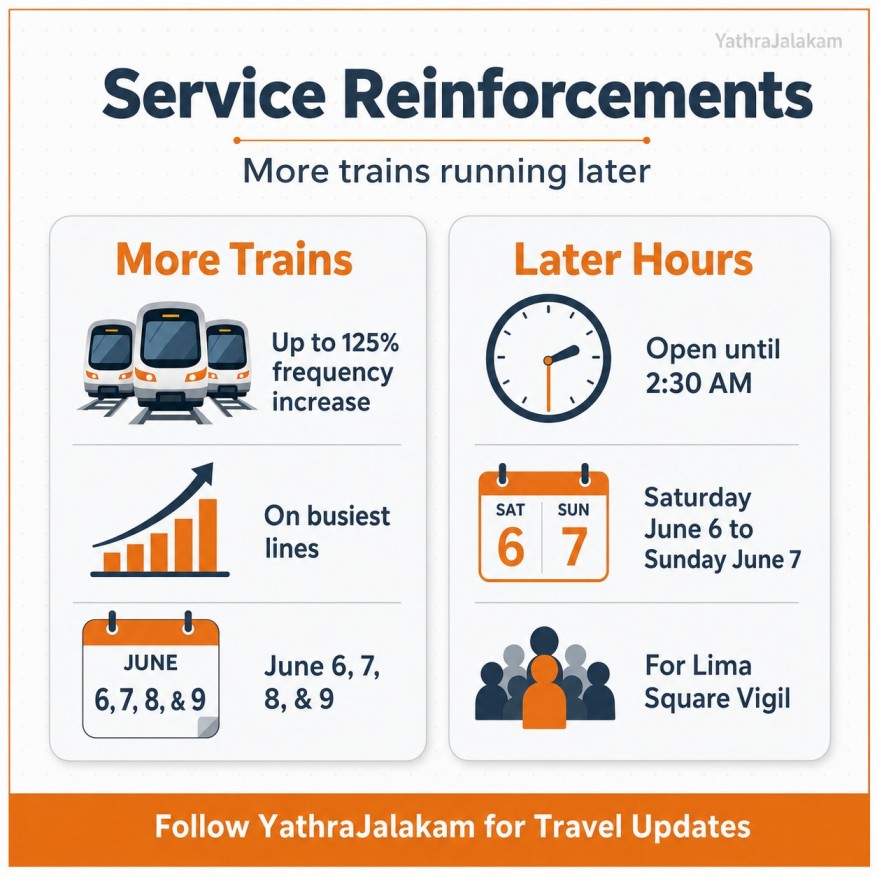
Metro opening hours will also be extended until 2:30 AM from Saturday, June 6, to Sunday, June 7. This is mainly to help people return home after the youth Vigil at Lima Square, near the Santiago Bernabéu area.
📌 Official Resource: Metro de Madrid information about extended service until 2:30 AM during the Pope’s visit Visit Official Website
Are EMT Buses Free During The Visit?
Yes, Madrid’s EMT city buses will be free between June 3 and June 9, 2026. This is a helpful measure for residents and visitors, especially because some Metro stations and streets around the main event areas will face restrictions.
However, free does not always mean faster. Some EMT routes will be adapted because of diversions near the places where the main events are happening. So while buses can be a good alternative, they may also face traffic diversions, temporary stop changes or delays near Cibeles, Castellana, Lima, Prado and nearby central streets.
The daytime and night-time EMT networks will be reinforced with 36 more buses. Connections to the airport will also be increased, but remember that the Airport Express usually has its own fare.
📌 Official Resource: Madrid Tourism update on free EMT buses and BiciMAD during the Pope’s visit Visit Official Website
What About Intercity Buses And Nearby Towns?
The intercity bus network will also be reinforced with up to 128 additional vehicles. These services are important because many pilgrims and visitors may be staying outside Madrid city centre in nearby towns.
Special coverage is planned for more than 20 towns hosting pilgrims. These include places like Rivas Vaciamadrid, Aranjuez, Fuenlabrada, Leganés, Pozuelo de Alarcón and Collado Villalba.
If you are staying in a nearby town, do not depend only on Google Maps at the last minute. Check the official CRTM app, Metro updates, Cercanías updates and your bus operator’s latest notice. During large events, the official real-time information is more reliable than a route you saved one week earlier.
- If you live in Madrid centre: avoid non-essential travel near Cibeles and Lima during main event hours.
- If you live in suburbs: check intercity bus and Cercanías options before choosing Metro-only routes.
- If you are visiting: choose accommodation with more than one transport option, not just one nearby Metro station.
- If you are going to the airport: leave earlier than usual because central road diversions may affect travel time.
How Much Should Budget For Transport?
During the special free EMT period, many city bus trips may cost €0 (₹0), which is a nice relief for travellers. But Metro, Cercanías, airport transfers and some specific services may still follow normal fare rules, so keep a small transport budget ready.
Madrid public transport is still much cheaper compared with taxis during high-demand event days. A normal Metro single ticket in Zone A costs around €1.50 to €2.00, depending on distance, and a 10-trip Metrobús ticket costs around €7.30. The Airport Express bus fare is listed as €5.
Transport Option Approx Cost Best For Important Note EMT city buses during June 3 to 9 €0 Short city trips where routes are operating Some routes may be diverted near event areas Metro Zone A single ticket €1.50-€2.00 Fast movement outside closed stations Seven stations closed on June 7 until 2:00 PM 10-trip Metrobús ticket €7.30 Residents or travellers taking multiple trips Useful if staying several days in Madrid Airport Express bus €5 Airport transfers, especially late night Usually not included in free city bus travel Taxi or ride-hailing Variable Families, luggage, late night backup May be slower near closed roads 📌 Official Resource: Metro de Madrid official fares page for current Metro ticket prices Visit Official Website
📌 Official Resource: EMT Madrid official fare information for city buses and Airport Express Visit Official Website
How Should Plan Travel In Madrid?
The best way to handle these Madrid Pope visit transport changes in 2026 is to plan like a local. Locals do not depend on only one route during special events. They keep two or three options ready and check real-time updates before leaving.
If you are travelling for work, airport, appointments, embassy work, university, shopping or sightseeing, leave earlier than usual between June 6 and June 9. For Sunday, June 7, be extra careful if your route depends on Line 2, Line 4 or Line 5 near the closed stations.
Here is a simple practical plan we would follow ourselves:
- Check whether your destination is near Plaza de Cibeles, Plaza de Lima, Retiro, Banco de España, Colón, Serrano or Chueca.
- Open the official Metro or CRTM app before leaving, not after reaching the station.
- Use Metro for longer distances, but avoid trying to exit at closed central stations.
- Use EMT buses for short city trips, but expect diversions near major event areas.
- Keep comfortable shoes because walking 10 to 20 minutes from a nearby open station may be easier than waiting in a crowd.
- For airport travel, keep extra buffer time and avoid crossing central Madrid if there is an outer route available.
Which Areas Need Extra Caution?
The most important areas to watch are Plaza de Cibeles and the surrounding streets on June 7, because this is where the Holy Mass will take place. Nearby areas like Banco de España, Retiro, Sevilla, Colón, Serrano and Chueca may feel much busier than usual.
On June 6, the youth Vigil at Lima Square will bring major movement around the Bernabéu and Castellana side of Madrid. Metro will stay open later that night, but the crowd after the event can still be heavy. If you do not need to be in that area, avoid passing through it at the end of the event.
Date Main Area Expected Impact Travel Advice June 3 to 9 Madrid city bus network EMT buses free, but some diversions possible Use buses carefully and check stop changes June 6 night Lima Square and Bernabéu area Youth Vigil crowds and extended Metro hours Expect crowds after the event June 7 morning to 2:00 PM Cibeles, Retiro, Salamanca, Chueca areas Seven Metro stations closed Use nearby stations and walk if possible June 8 and 9 Central Madrid and official event areas Reinforced services and possible security changes Keep route options ready Final Thoughts
The Madrid Pope visit transport changes 2026 may look confusing at first, but once you understand the main points, it becomes manageable. Seven Metro stations are closed on June 7 until 2:00 PM, Metro services are reinforced, EMT buses are free from June 3 to 9, and extra monitoring will help authorities adjust transport in real time.
Our honest Suggestion is this: do your own research, check official sources and do not depend only on WhatsApp forwards or random social media screenshots. This is exactly how we handled our own move to Spain too – step by step, with official information.
Madrid does not needs to feel difficult if you prepare well. Keep your route flexible, leave early, carry water, wear comfortable shoes and use official updates. With a little planning, you can move around Madrid safely and confidently even during one of the city’s biggest public events of the year.
Frequently Asked Questions
Which Metro stations are closed for the Pope’s visit in Madrid?
Seven stations will be closed from the start of service until 2:00 PM on Sunday, June 7, 2026. They are Retiro, Banco de España and Sevilla on Line 2, Velázquez, Serrano and Colón on Line 4, and Chueca on Line 5.
Will trains stop at the closed Metro stations?
No, when required, trains may pass through these stations without stopping. This means your Metro line may still operate, but you may not be able to get down at the affected station.
Are EMT buses free during Pope Leo XIV’s Madrid visit?
Yes, EMT city buses are free between June 3 and June 9, 2026. But some routes may be changed or diverted near event areas, so always check the latest route information before travelling.
Will Madrid Metro stay open late on June 6?
Yes, Metro will extend service until 2:30 AM from Saturday, June 6, to Sunday, June 7. This is mainly to help people return after the youth Vigil at Lima Square.
Is it safe for tourists to visit Madrid during this event?
Yes, Madrid is preparing special security and transport measures for the visit. Still, tourists should avoid unnecessary travel through crowded event zones and keep extra time for every journey.
Should I use taxi instead of Metro during the Pope’s visit?
A taxi can be useful if you are travelling with luggage, elderly parents or children. But near Cibeles, Lima and central Madrid, road closures and diversions may make taxis slower than walking plus Metro.
Found this helpful? Share it with someone planning to move to Spain. Subscribe to our Life in Spain for Indians YouTube channel for real, honest videos about life in Spain – and follow us on Instagram for daily updates: Spain News for Indians.