Tromso Whale Watching: Worth it?
If you are wondering about Tromso whale watching in 2026 and whether it is really worth it, this is our honest answer after doing it ourselves in the middle of an Arctic winter. We are a couple living in Madrid, and we planned this entire Norway trip on our own – no package, just research and a lot of layered clothing. Standing on the deck at minus 27 degrees with orcas surfacing next to the boat is something neither of us will ever forget.

Why Do Whales Come to Tromso in Winter?
The whole reason Tromso is famous for whale watching comes down to one small fish – the herring. Every winter, huge schools of herring move into the deep fjords around Tromso because the water there is comfortable for them and rich in nutrients. For humpback whales and orcas (killer whales), herring is basically their favourite meal, so they follow the fish into these fjords to feed.
This feeding period is very important for the whales. They eat a big part of their yearly nutrition in just a few months here, and build up a thick layer of fat to survive the rest of the year. That is why the season is concentrated from roughly late October to January. Statistically, November to early January is when sightings are most frequent, although in recent years whales have started arriving as early as the first half of October.
Our Whale Watching Experience in Tromso, Norway👇
The most fascinating thing we learned is how they hunt. Humpback whales use a technique called bubble netting. A group of whales dives deep below a school of herring, then swims in a circle releasing air bubbles. The bubbles act like a net, trapping the fish and pushing them up towards the surface. Then the whales rush up through the middle with their mouths wide open and swallow everything. Orcas use a slightly different trick called carousel feeding, where they herd the herring into a tight ball and stun them with their tails. Either way, it is a proper tactical team effort, and watching the water boil with fish is incredible.
📌 Official Resource: Visit Tromso, the official tourism board, lists whale watching operators, seasons and other winter activities in the region. Visit Official Website
What Exactly Is a Fjord?
We keep saying “fjord” in our videos, so let us explain it simply. A fjord is a long, narrow, very deep stretch of sea that cuts into the land, usually carved by glaciers thousands of years ago. When you go north towards the Arctic Circle, especially in Scandinavian countries like Norway, you find hundreds of them.

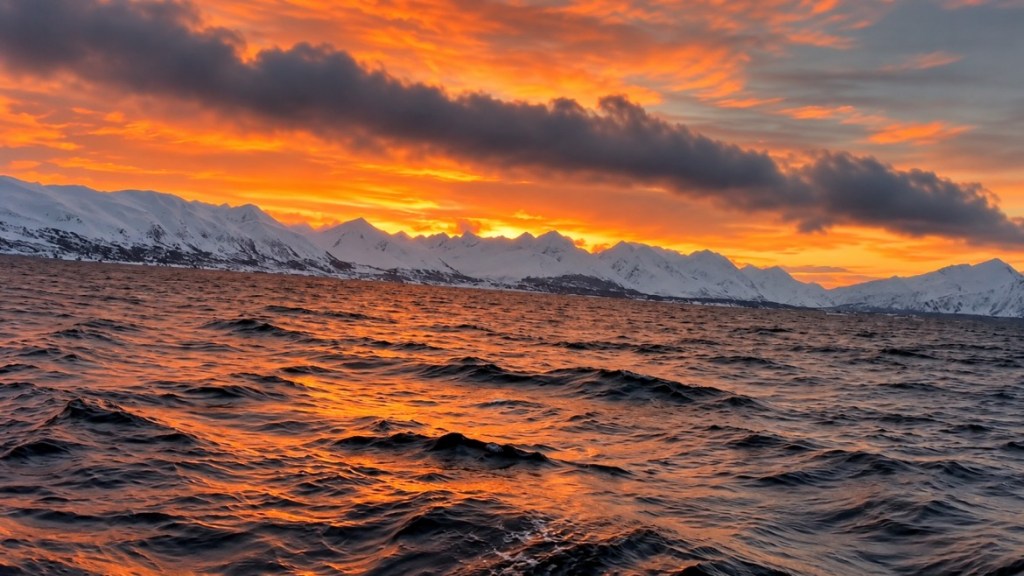
Travelling through a fjord feels like floating between two walls of snow-capped mountains. The water is dark, deep and extremely cold. Around Tromso you also get views of the Lyngen Alps, which in winter light look almost unreal – soft pink and blue at the same time.
One thing many people don’t realise: you normally cannot see whales right next to Tromso city. The feeding grounds are further out, so the boat has to travel for a few hours to reach them. That is why the tours are long, full-day trips, not a quick one-hour harbour cruise.
What Was Our Brim Explorer Trip Like?
After comparing a few operators, we booked directly with Brim Explorer, a Norwegian company that runs hybrid-electric boats built for whale watching. When they spot whales, they switch to the silent electric engine so the animals are less disturbed. We liked that approach, and booking directly on their website was simple – no middleman commission.
What Time Does the Tour Start?
Our trip started at around 7:45 in the morning. In the polar night, that means complete darkness. The sun had not risen, it was around minus 7 degrees in the city, and there was snow everywhere. There was more than 100 people on the boat – families, small children, older couples and even a big fluffy dog in a proper winter coat. The full tour lasts about 8 to 9 hours, and they usually return between 5:00 and 5:30 in the evening.
Inside, the lounge is heated and has large panoramic windows. There is a bar selling coffee, snacks, chips and other food, so you don’t need to carry a full lunch, but a few of your own snacks helps because prices on board are Norwegian prices.
Do They Guarantee Whale Sightings?
No, and honestly no genuine company will. Right at the time of booking they tell you clearly that whale sightings are not guaranteed. These are wild animals. The crew goes where whales were seen the day before and where the probability is high, but nobody can promise anything. If someone sells you a “100% guaranteed whale tour”, treat that as a red flag.
How Cold and Rough Does It Get?
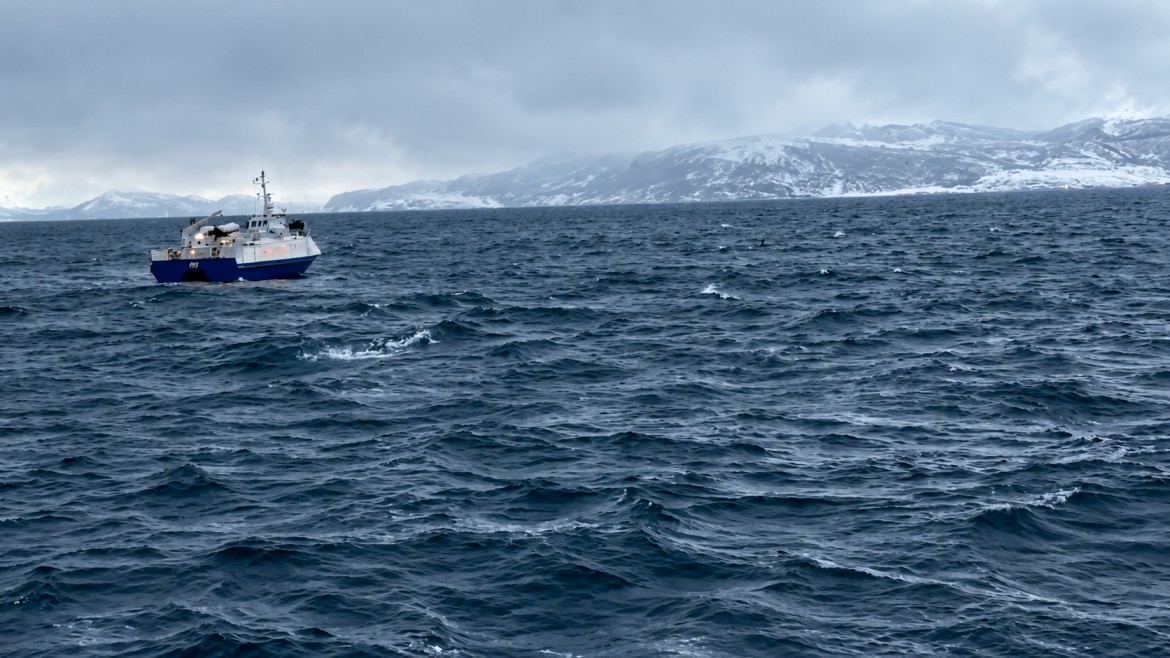
When we reached the open bay, it was a different world. The city was around minus 7, but outside on the deck with the wind, it felt close to minus 27 degrees Celsius. That wind goes straight through normal jackets. If you want to step out, feel the snow and actually watch the whales properly, you have to dress in serious layers.
Here is what worked for us:
- Thermal base layer (top and bottom) – merino wool is best.
- Fleece or wool mid layer for warmth.
- Windproof, waterproof outer jacket and snow pants.
- Very thick gloves plus thin liner gloves so you can use your phone.
- Wool hat, scarf or neck gaiter covering your face.
- Insulated winter boots with good grip and two layers of socks.
We made a dedicated video on our full winter preparation for this trip, so check our YouTube channel if you want the complete packing list.
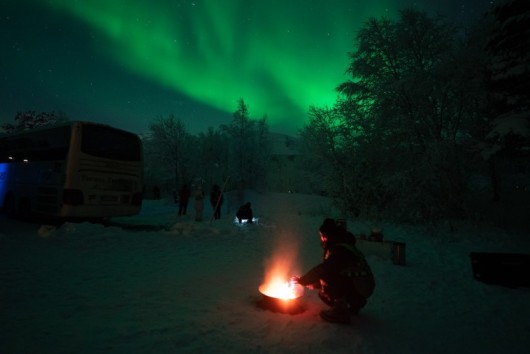
Our Aurora Experience👇
📌 Official Resource: Check the Arctic weather, wind and temperature forecast for Tromso on Yr, run by the Norwegian Meteorological Institute, before your tour day. Visit Official Website
Will You Get Seasick on the Boat?
By around 12:30 we had reached the area where whales were likely, and the waves were big. The boat was rocking so much that things on the tables were sliding onto the floor. The captain kept announcing calmly that this is normal, just hold on to your seat or a railing. The crew was brilliant – they walked around offering sick bags, medicine and help to anyone who needed it.
Many people got seasick, including children. The reason is simple. Inside the boat, your eyes see the seat and walls around you, which are not moving relative to you. But your inner ear, which controls balance, feels the boat rocking. Your brain gets two conflicting signals and that confusion makes you feel sick.
The crew’s advice, which really works: look at the horizon through the front windows, or go outside into the fresh air. We both felt a bit queasy, and stepping out onto the cold deck was an instant relief. Brim Explorer also recommends a small breakfast, ginger drinks, not closing your eyes, and taking a seasickness tablet before you board. If you easily get travel sick, definately take the tablet.
How Do They Spot Whales Without Sonar?
We were surprised to learn that these boats don’t use sonar. The sound waves disturb the whales, so the crew relies completely on surface signs and sharp eyes. The first sign is the “blow” – when a whale comes up to breathe, it pushes out air that looks like a puff of smoke above the water. On a cold day it is surprisingly visible from far away.
The second sign is seagulls. When whales push herring up to the surface, flocks of birds gather above to grab the leftovers. A big group of seagulls circling one spot usually means there is feeding happening underneath.
To tell everyone where to look, the crew uses the clock position system. Imagine the boat is a clock lying flat: 12 o’clock is straight ahead, 3 o’clock is to the right, 6 o’clock is behind you and 9 o’clock is to the left. So when the guide says “orca at 2 o’clock”, everyone turns slightly to the front-right. Simple, and it works better then pointing.
📌 Official Resource: Brim Explorer’s Silent Whale Watching tour page has current season dates, departure times, prices and cancellation rules. Visit Official Website
Did We Actually See Orcas?
Yes, and more than we expected! The main species we saw was the orca, or killer whale. The announcement came, positions were called, and everyone rushed out onto the deck at the same time – cold, wind and snow forgotten. The orcas doesn’t stay above water for long, only about three or four seconds each time, and then they disappear without any hint of where they will come up next.
Because of that, filming them was really hard. We got only a few short clips. After some time we simply put the phone away and watched with our own eyes, which we beleive was the better decision anyway. Some moments are meant to be seen, not recorded.
After a while, fog started to roll in. Fog in the Arctic is serious – visibility drops badly, and the wind and waves often get rougher. The captain decided it was not safe to keep searching, so we turned back towards Tromso. The return trip took around four and a half to five hours. Safety first, and we fully respected that call.
How Much Does Tromso Whale Watching Cost in 2026?
Norway is expensive, no sugarcoating it. But booking directly with the operator saves a lot compared to agency packages. Here are the current Brim Explorer prices for the upcoming season (16 October 2026 to 31 January 2027). Rupee values are approximate and depend on the exchange rate on the day you pay.
| Item | Price (NOK) | Approx. Euro and Rupees | Notes |
|---|---|---|---|
| Silent Whale Watching – Adult (18+) | 1,990 NOK | €170 (approx. ₹19,000) | 8 to 9 hour tour, departs 07:30 to 09:00 |
| Youth (12 to 17) | 1,492.5 NOK | €128 (approx. ₹14,500) | Based on 2025/26 season pricing |
| Child (3 to 11) | 995 NOK | €85 (approx. ₹9,500) | Based on 2025/26 season pricing |
| Whale Watching with Scenic Road Trip – Adult | 1,790 NOK | €153 (approx. ₹17,000) | Mix of bus and boat to Skjervoy |
| Schengen visa fee (Indian passport) | – | €90 (approx. ₹10,000) | Norway is part of Schengen |
| Snacks and coffee on board | Varies | €10 to €20 (approx. ₹1,100 to ₹2,200) | Carry some of your own snacks |
A few important booking rules: you get a 100% refund if you cancel more than 48 hours in advance, and no refund after that. If the weather is too bad for whale watching, the trip becomes an Arctic fjord cruise instead. Also, if whales are not seen for two days in a row late in the season, they usually stop tours and offer a reschedule or refund. One more thing – pets are not allowed on this specific tour now, so the dog we met on our trip would not get on board today.
📌 Official Resource: The Norwegian Directorate of Immigration (UDI) has official Schengen visa information for Indian passport holders visiting Norway. Visit Official Website
If you are an Indian living elsewhere in Europe with a valid residence card, you can usually travel to Norway without a separate visa, which makes this trip much cheaper and easier. Flights to Tromso normally connect through Oslo. Book at least a few weeks ahead in November and December, because good departure times fill up fast.
Is Tromso Whale Watching Worth It?
For us, a clear yes – but go with the right expectations. This is not a comfortable, relaxed cruise. It is long, it is cold, the sea can be rough, and you might get seasick. You are chasing wild animals that don’t follow your schedule.
But even if you are unlucky with the whales, the day itself is special. The sunrise over icy mountains, the fog rolling over the fjord, the strange soft colours of Arctic daylight, and the cold itself – all of it is an experience you cannot get anywhere near home.
Frequently Asked Questions
What is the best month for Tromso whale watching?
November to early January is statistically the best period, when whales have settled into feeding on herring. The 2026 season with Brim Explorer runs from 16 October 2026 to 31 January 2027.
How much does whale watching in Tromso cost for Indians?
An adult ticket with Brim Explorer costs 1,990 NOK, roughly €170 (approx. ₹19,000). Booking directly on the operator’s website is much cheaper than buying through a travel agent package.
Is whale sighting guaranteed in Tromso?
No genuine operator guarantees sightings because whales are wild animals. Tours go to areas with recent sightings, so the chances are high during peak season, but never 100%.
Which whales can you see in Tromso?
The main species are orcas (killer whales) and humpback whales, with fin whales and porpoises also possible. We mostly saw orcas on our trip.
Do Indians need a visa for Norway?
Yes, Indian passport holders need a Schengen visa, which currently costs €90 (approx. ₹10,000). If you already hold a valid residence permit from another Schengen country, you usually don’t need a separate visa.
How do I avoid seasickness on a whale watching boat?
Take a seasickness tablet before boarding, eat a light breakfast and keep your eyes on the horizon. If you still feel unwell, step outside for fresh air, which helped us immediately.
Found this helpful? Share it with someone planning to move to Spain. Subscribe to our Life in Spain for Indians YouTube channel for real, honest videos about life in Spain – and follow us on Instagram for daily updates: Spain News for Indians.