
What to Wear in Tromsø Winter: -20℃ Survival Guide
Tromsø sits well above the Arctic Circle, and in winter a small clothing mistake is enough to turn a dream Northern Lights trip into a miserable, and sometimes risky, experience. So here is the short answer to what to wear in Arctic winter in Norway: three layers (a merino wool base, a warm wool or fleece mid layer, and a windproof, waterproof outer jacket), snow pants, insulated snow boots with room for two pairs of wool socks, ice grips, a windproof wool hat, warm mittens and a few heat packs. Cotton stays at home.
If you are coming from India, Dubai or even Madrid, the Arctic cold is a different game. The good news is that you do not need a fancy tour package or a suitcase full of expensive brands. With some honest research and the right layers, anyone can walk around comfortably at minus 20 degrees.
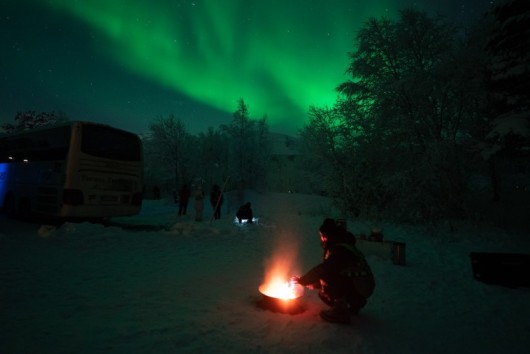
How we saw Northern Lights 👇
Quick Summary: The Most Important Advice
Layering matters more than one big jacket. Wear merino wool next to your skin, a warm insulating layer in the middle and a windproof, waterproof shell on top. Buy snow boots by their stationary comfort temperature, not the moving one, because you stand still for hours while chasing the Northern Lights. Use ice grips on the city’s icy slopes, carry heat packs for fingers and toes, and keep everything dry, because wet clothing is what really makes you cold.
Tromsø Winter Weather: How Cold Does It Really Get?
Tromsø city is actually milder than most people expect, thanks to the Gulf Stream and the sea around it. Visit Tromsø gives the average winter temperature as around minus 4 degrees. In January, the coldest month, daytime highs are around minus 3 and nights drop to around minus 10. On the coldest nights of the year it typically falls to about minus 14, and the city’s record lows are around minus 20.
So why prepare for minus 20? Because the tourist activities rarely happen in the city centre. Northern Lights chases, dog sledding and reindeer trips take you inland and into open valleys, where it is much colder. Visit Tromsø itself advises visitors doing Arctic activities to be prepared for anything from minus 25 to plus 5 degrees. Add wind and the “feels like” temperature drops even further.
- Snow is frequent: In January, Tromsø sees snow or rain on roughly 22 days of the month, so expect to be walking in fresh snow on most days of a winter trip.
- Snow keeps building: Snow depth usually peaks in April, so even a March trip is a full winter trip.
- Polar night: From late November to mid-January the sun does not rise above the horizon, so you will be outdoors in darkness and cold for long stretches.
- Check the wind, not just the number: Always look at the “feels like” temperature before heading out.
📌 Official Resource: Yr is run by the Norwegian Meteorological Institute and NRK. Check the hourly forecast, wind and “feels like” temperature before every outing. Visit Official Website
If the aurora is the main reason for your trip, pair this clothing guide with our tips on planning your Tromsø Northern Lights trip.
The Three-Layer System: Base, Mid and Outer Layer
Many people think one huge jacket can beat any cold. It cannot. What you wear under the jacket matters more than the jacket itself. Layers trap warm air between them, and you can remove or add one as your activity level changes.
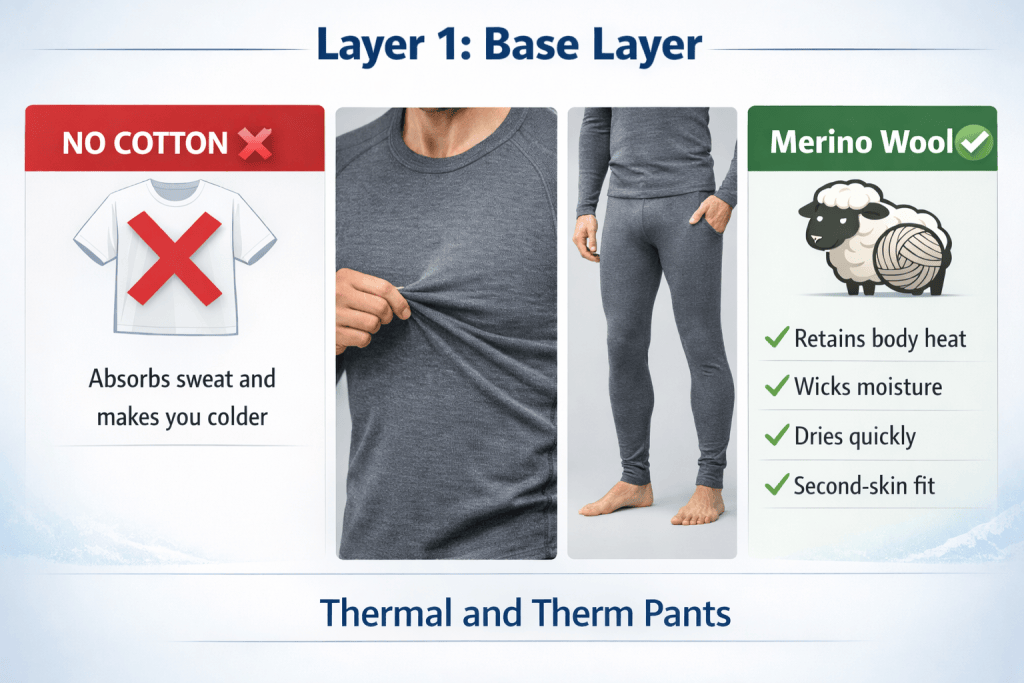
Base Layer: Merino Wool, Never Cotton
- No cotton: Cotton soaks up sweat and stays wet, which pulls heat out of your body. This is the single biggest mistake first-time Arctic visitors make.
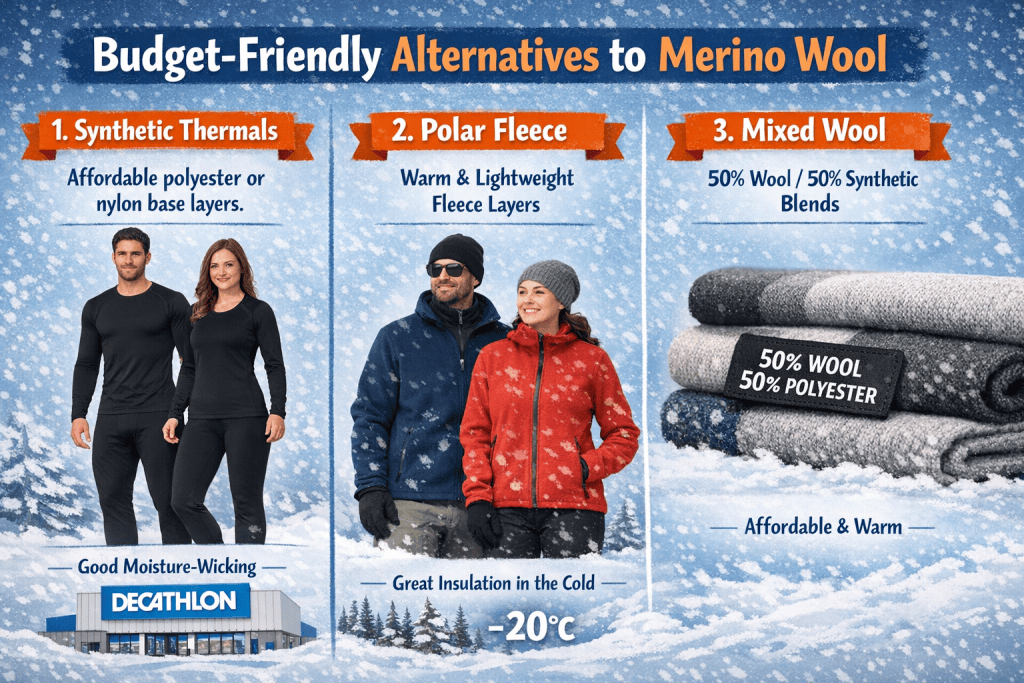
- Choose merino wool: It keeps you warm, manages sweat and does not hold odours, so you can wear it for several days. Good synthetic thermals (polyester) are a budget alternative.
- Fit like a second skin: The base layer should sit close to your body. A long-sleeved top and full-length bottoms are both needed.
Mid Layer: Insulation That Traps Heat
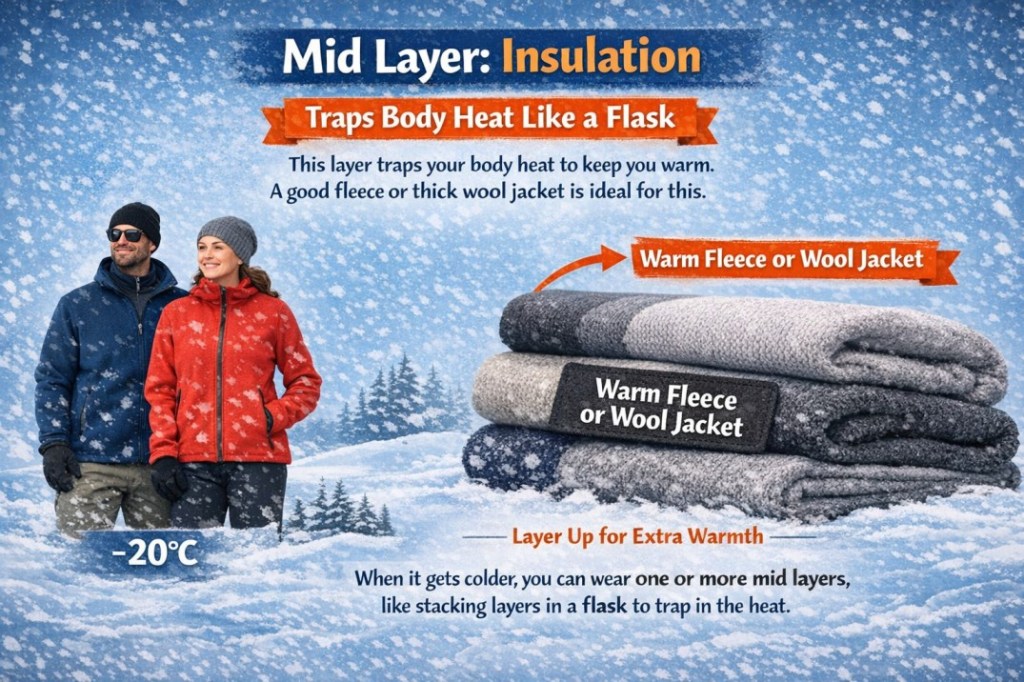
- Job of this layer: Trap your body heat so it does not escape.
- What to wear: A thick wool sweater, a fleece or a light down jacket all work well.
- Stack when needed: On very cold nights, wear two mid layers instead of buying a heavier jacket.
- Adjust as you move: Remove a layer when you feel warm during a hike, and add it back the moment you stop. You cool down very fast once you stand still.
Outer Layer: Windproof and Waterproof Shell Plus Snow Pants
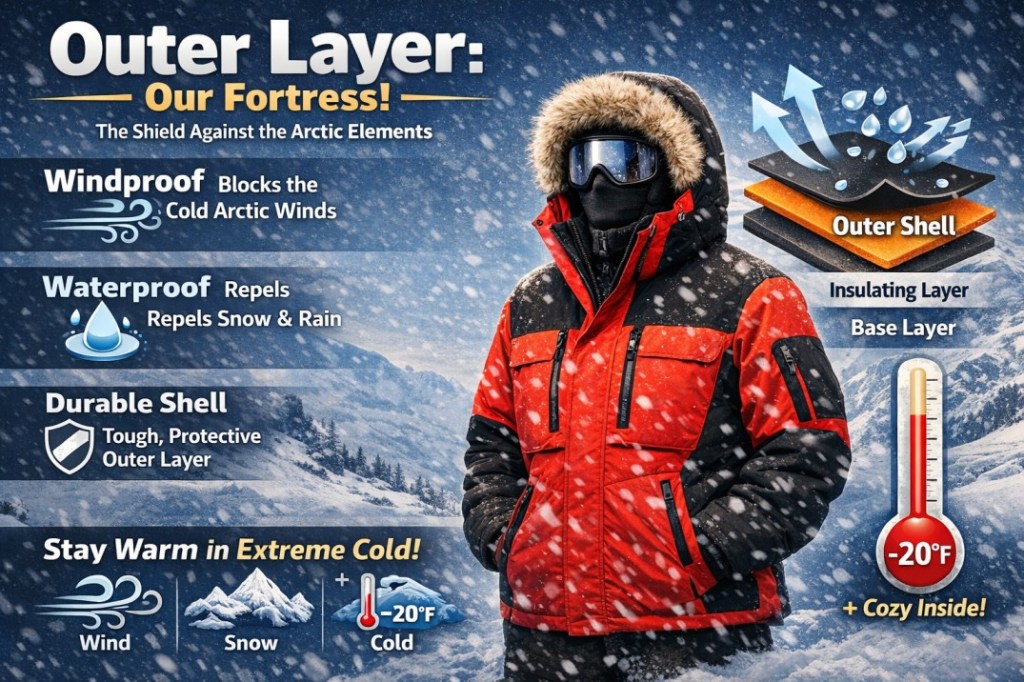
- Windproof and waterproof: Your jacket must stop Arctic wind and snow from getting in. This is its main job.
- Room inside: Buy it big enough to fit your base and mid layers without squeezing them.
- Snow pants are compulsory: Jeans get wet, freeze and stay cold. Waterproof snow or ski pants over thermal bottoms keep your legs warm, and warm legs help keep your core warm.
When all three layers work together, you can be comfortable inside even when it is well below zero outside. Tour operators for dog sledding, snowmobiling and some Northern Lights trips also hand out thermal suits, but always confirm this before booking.
📌 Official Resource: Visit Tromsø, the official tourism board, has its own guide on how to dress for winter, including where to buy ice grips in the city. Visit Official Website
Snow Boots for Tromsø: What Temperature Rating Do You Actually Need?
If you are planning a trip here, boots are the most important purchase. Once cold gets into your feet, your whole body feels it and the trip stops being fun. Proper snow boots come with a comfort temperature rating, and this is where many travellers get confused.
- Two ratings, not one: Brands like Decathlon test boots both when you are walking and when you are standing still, and the numbers are very different. For example, their SH900 high leather boots are rated comfortable to minus 10 when stationary but minus 19 when moving.
- Go by the stationary number: Waiting for the aurora means standing in snow for hours. If you want to be comfortable at minus 20 while standing, you need a warmer category of boot, such as Decathlon’s SH900 lace-up snow boots, rated to minus 22 stationary and minus 32 moving.
- Waterproof membrane: Look for a waterproof, breathable membrane so melting snow stays out and sweat can escape.
- Serious grip: Deep rubber studs matter on snow. Smooth-soled fashion boots are dangerous on Tromsø’s hilly, icy streets.
- Trekking-friendly: If you plan winter hikes, choose snow boots with ankle support that also work for trekking, so one pair covers everything.
Double Wool Socks: Keeping Your Toes Warm
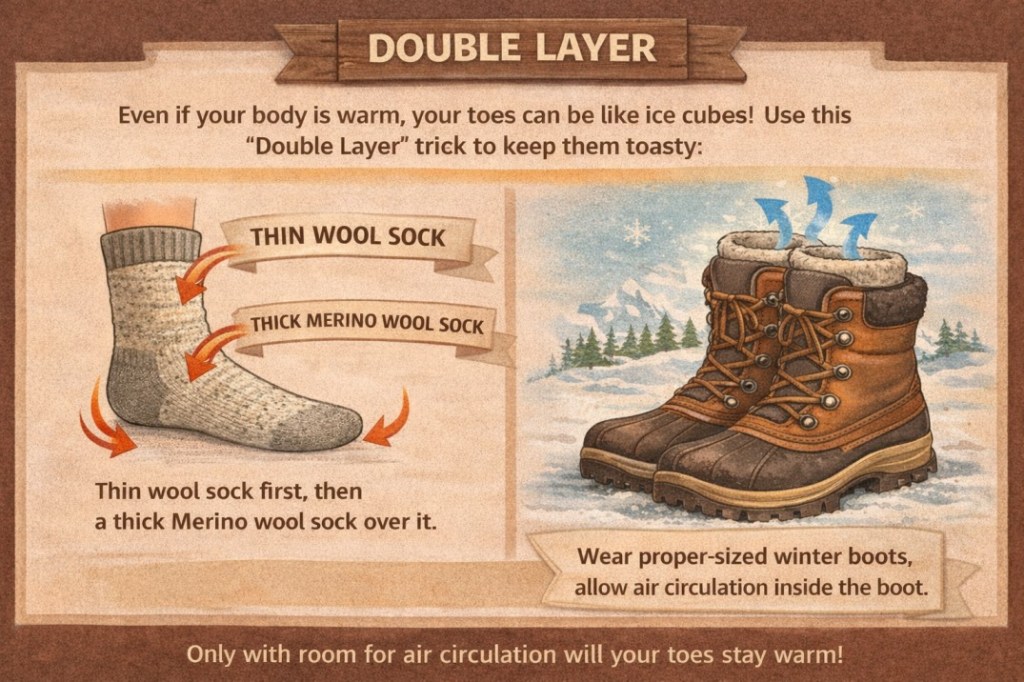
Even when your body is warm, your toes can turn into ice. The fix is a simple double layer.
- First pair: A thin wool sock next to the skin.
- Second pair: A thick wool sock over it.
- Size up your boots: If your boots are tight, the second sock squeezes your feet and cuts blood flow, which makes your toes colder, not warmer. Try boots on while wearing both pairs.
- Carry a spare pair: Keep dry socks in your backpack in case your feet get wet.
Black Ice in Tromsø: Ice Grips and Trekking Poles
In winter, Tromsø’s roads and pavements are often covered with black ice, a thin, clear layer of ice that is almost invisible and extremely slippery. Tromsø is also a city of slopes, so a fall here can easily mean a broken wrist or ankle.
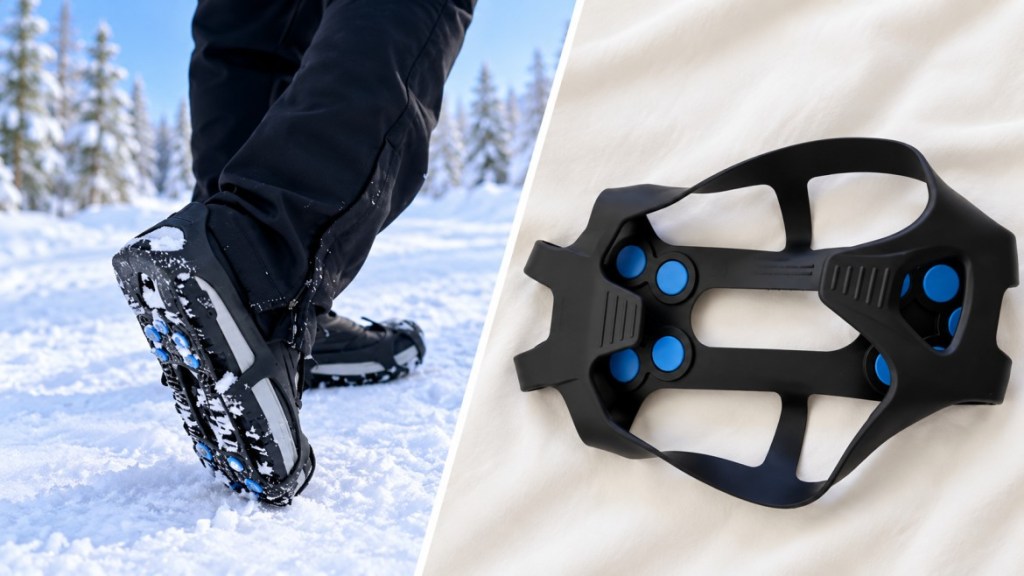
- Ice grips: These slip over your boots and have small metal studs or buttons underneath that bite into ice. They are sold in shoe shops, sports shops and at the Tourist Information office in Tromsø.
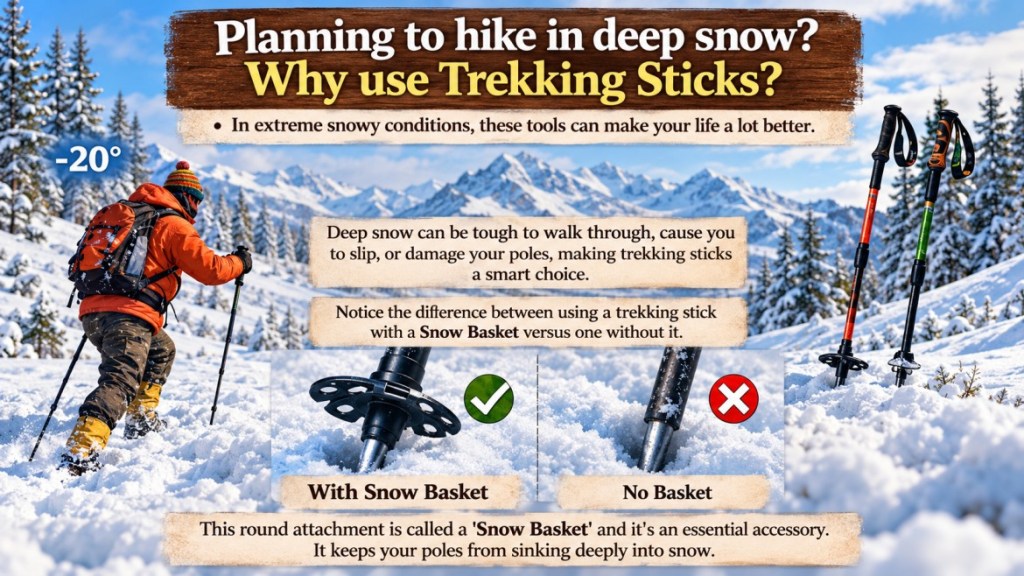
- Trekking poles: On snow-covered trails, you cannot see where the ice hides underneath. Poles give you two extra points of balance and take pressure off your knees, which really helps if you are not used to walking in snow.
- Snow baskets: Check that your poles have snow baskets, the flower-like discs near the tip. Without them, the pole just sinks into deep snow.
- Walk like a penguin: Short steps, weight over your front foot and hands out of your pockets.
Hands, Head and Face: Mittens, Hats and Neck Gaiters
Your hands, feet, neck and head usually feel the cold first, so they need proper protection.
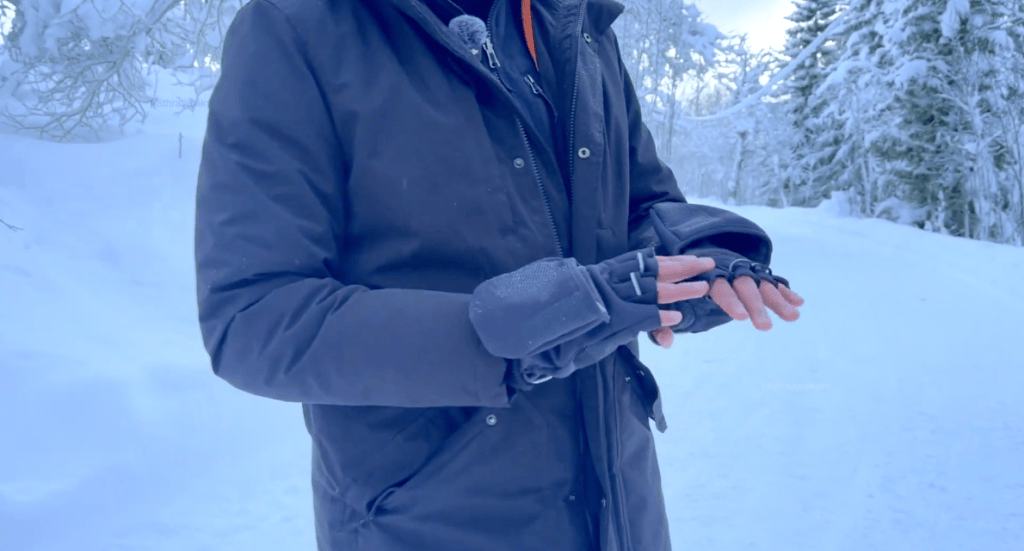
- Convertible mittens: Look for gloves with a fold-over mitten flap. Close it when it is very cold, and open it when you need your fingers for photos or holding a coffee.
- Why mittens work: When your fingers sit together inside one cover, they share warmth and hold heat better than in separate finger slots.
- Windproof wool hat: A thin fashion beanie is not enough. Choose a wool hat that blocks the wind and covers your ears.
- Neck gaiter or scarf: Protects your neck, nose and cheeks from wind and frostbite.
The 40 Percent Head Heat Loss Myth
You may have heard that 40 percent of body heat escapes through the head. This figure came from an old US Army field manual and has since been debunked. Research shows you lose heat roughly in proportion to exposed skin, and the head accounts for only about 7 to 10 percent of heat loss. A hat is still essential, but so are gloves, snow pants and warm socks. An uncovered hand or leg costs you just as much warmth as an uncovered head.
Waterproofing: Why Wet Means Cold in the Arctic
Snow sticks to your shoes, gloves and clothes all day. After a while it melts, and once that water touches your skin, you will feel so cold that all you want is to go back to your hotel.
- Everything waterproof: Jacket, snow pants, boots and gloves should all have a good level of water resistance.
- Brush off snow: Before entering a car or building, knock snow off your boots and clothes so it does not melt into them.
- Dry gear overnight: Take out boot liners and hang gloves to dry every evening.
- Carry a thermos: A hot drink helps, and plain water in a normal bottle can freeze.
Heat Packs: How Long Do Hand and Toe Warmers Last?
Heat packs are the secret weapon of Arctic travel. Even with the best jacket and gloves, fingers and toes can go numb, especially while standing still waiting for the Northern Lights.
- How they work: Open the packet and shake it. Iron powder inside reacts with air and slowly releases heat. No batteries needed.
- How long they last: Durations vary by type. With a popular brand like HotHands, hand warmers last up to 10 hours, toe warmers up to 8 hours, foot warmers up to 9 hours and larger body warmers up to 18 hours. Check the pack you buy.
- Use the right type for boots: Toe warmers are thin and designed to work in the low-oxygen space inside a boot. Stick them on the outside of your sock, never directly on skin.
- Where to place them: Inside gloves, in jacket pockets or inside boots.

Where to Buy Winter Gear: Decathlon and Local Shops
You do not need premium brands to survive Tromsø. Stores like Decathlon are a great place to start, because product labels show the comfort temperature, how many degrees each item can handle, and how waterproof it is. You can compare and choose calmly instead of guessing.
- Read the labels: Check the stationary comfort temperature and the waterproof rating on boots, jackets and gloves.
- Buy before you fly: Winter gear in Norway is usually more expensive, so buying before your trip can save money.
- Try everything together: Test boots with both pairs of socks and the jacket over all your layers.
- Ask your tour operator: Many Arctic activities include thermal suits, boots, hats and mittens, so check before buying items you will only use once.
Tromsø Winter Packing Checklist
| Item | What to Look For | Why It Matters |
|---|---|---|
| Base layer top and bottoms | Merino wool or synthetic, close fitting | Keeps sweat off your skin |
| Mid layer | Thick wool sweater, fleece or light down | Traps body heat |
| Outer jacket | Windproof, waterproof, roomy | Blocks Arctic wind and snow |
| Snow pants | Waterproof, insulated | Jeans get wet and freeze |
| Snow boots | Stationary rating near minus 20, one size up | Warm feet while standing still |
| Wool socks | One thin and one thick pair, plus spares | Double layer for warm toes |
| Ice grips | Metal studs, fit over boots | Prevents falls on black ice |
| Trekking poles | With snow baskets | Balance on snowy trails |
| Convertible mittens | Waterproof, fold-over flap | Warm fingers plus camera access |
| Wool hat and neck gaiter | Windproof, covers ears | Protects against frostbite |
| Heat packs | Hand and toe warmers | Emergency warmth for extremities |
| Thermos | Insulated | Hot drinks, water that does not freeze |
| Book tours | Confirm thermal suit and boots included | Avoid buying gear you do not need |
Common Mistakes to Avoid in Tromsø
- Wearing cotton thermals or jeans: They hold moisture and make you colder.
- Trusting one big jacket: Without proper layers underneath, even an expensive jacket will not keep you warm.
- Buying boots by the “moving” rating: Aurora hunting is mostly standing still, so look at the stationary number.
- Tight boots with thick socks: Poor blood flow means frozen toes.
- Sneakers or fashion boots on ice: Smooth soles and black ice are a painful combination.
- Judging by the city temperature: Inland valleys and open areas can be far colder than the city centre.
- Overheating and sweating: Remove a layer when active, add it back when you stop.
Final Thoughts
Tromsø in winter is magical: snow-covered streets, blue polar twilight and, if you are lucky, the sky lighting up green above you. But the Arctic does not forgive poor preparation. The difference between a trip you remember with a smile and one you want to forget is usually just layers, boots and dry socks.
None of this needs an agent or an expensive package. A little research, a visit to a sports store and some honest checking of labels is enough. Pack smart, respect the ice and keep checking the forecast, and you will walk around at minus 20 degrees as comfortably as the locals.
Frequently Asked Questions
Do Northern Lights tours in Tromsø provide warm clothing?
Some do and some do not. Dog sledding, snowmobiling and reindeer trips usually include thermal suits, and some Northern Lights tours also provide suits and boots, so always ask the operator before booking. You still need your own base and mid layers underneath.
Can I take heat packs on a flight to Norway?
Air-activated heat packs are generally allowed on flights, and HotHands states that its warmers can be carried aboard airplanes. Airline and airport rules can differ, so check with your airline before packing a large supply.
What should I wear indoors in Tromsø?
Norwegian homes, hotels, cafes and buses are well heated, so pack a few light, comfortable clothes for indoors. The easiest approach is to keep your base layer on and take off the mid and outer layers as soon as you walk in, so you do not start sweating.
Found this helpful? Share it with someone planning to move to Spain. Subscribe to our Life in Spain for Indians YouTube channel for real, honest videos about life in Spain – and follow us on Instagram for daily updates: Spain News for Indians.

3 Comments